
Sued by Asset Acceptance in New York? What to Do Next
Asset Acceptance, LLC is a debt buyer that has been owned by Encore Capital Group, the parent company of Midland, since 2013. It buys old accounts from banks, utilities, phone companies and other creditors, then tries to collect them or sues in its own name. If Asset Acceptance has sued you in New York, you usually have 20 or 30 days to answer. Tariq Law PC defends New Yorkers against these lawsuits.
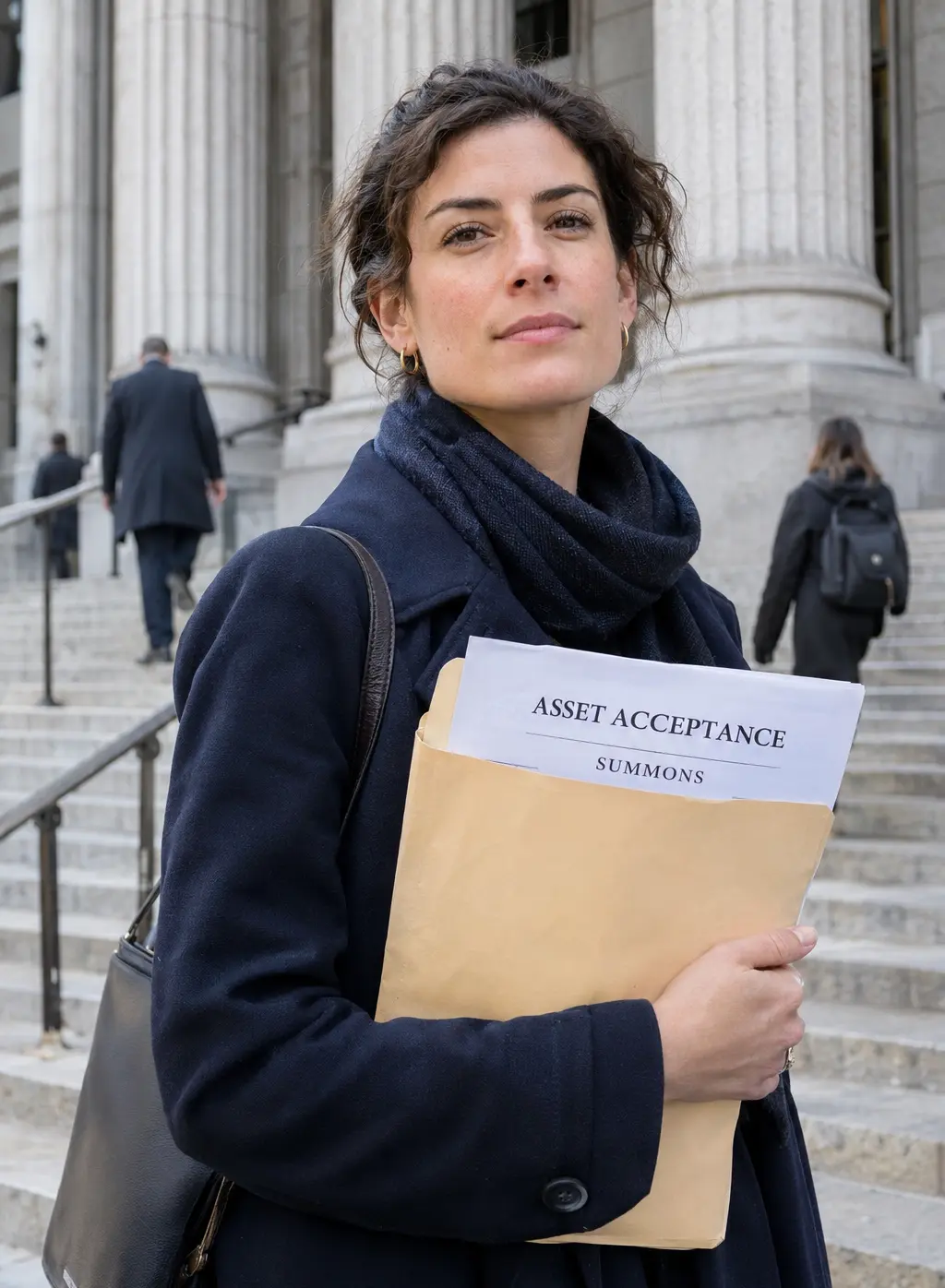
Got papers from Asset Acceptance?
Send us your summons, letter or bank notice. We can review it and explain your options.
Who is Asset Acceptance?
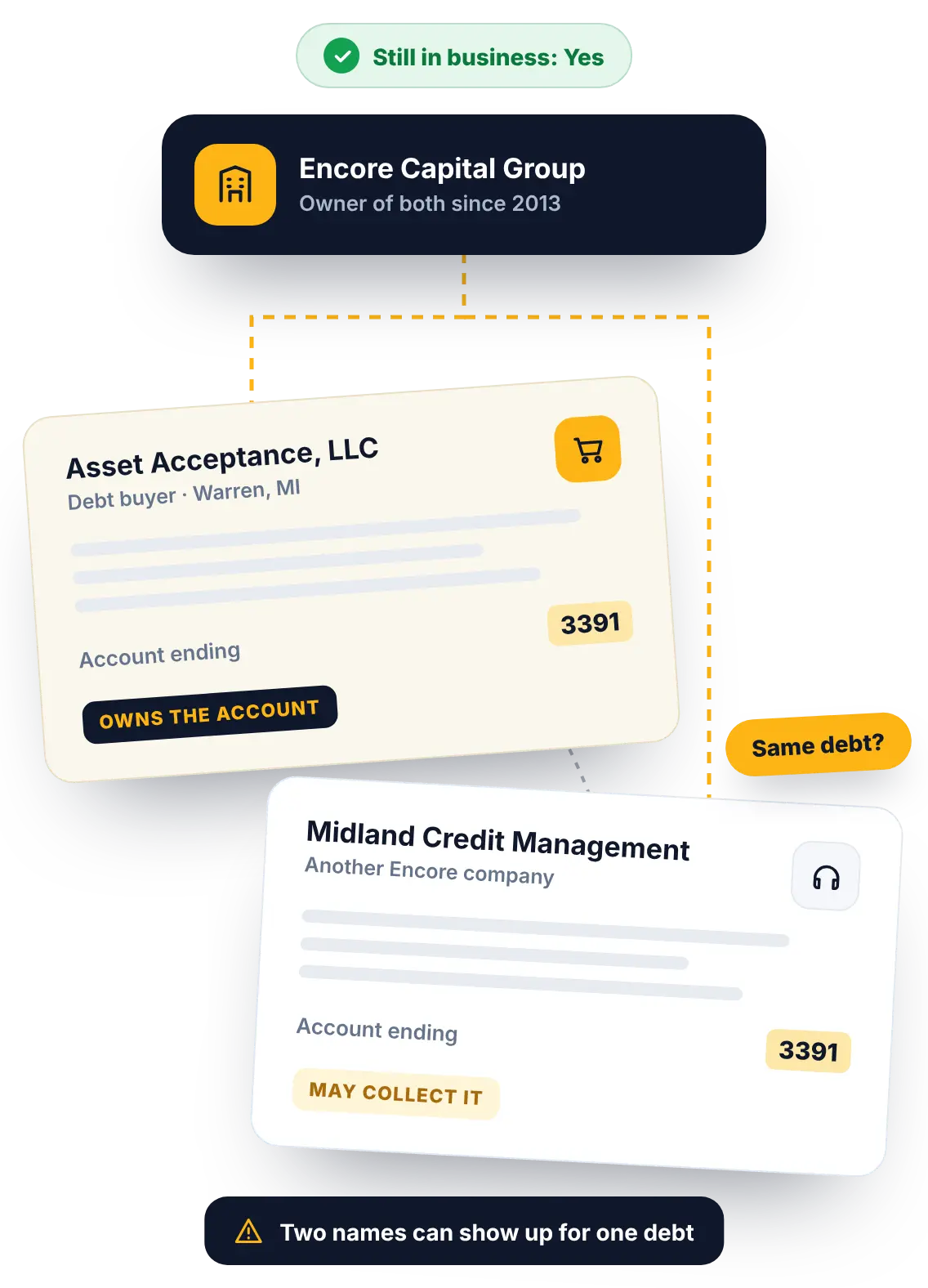
Asset Acceptance is not your original lender. It bought your account, usually after the original creditor charged it off. Three company names often appear together:

Encore Capital Group, Inc
Parent company since 2013

Asset Acceptance, LLC
Owns older account

midlan credit management
May collect some of them
| Name | What it is | Where you may see it |
|---|---|---|
| Asset Acceptance, LLC | The debt buyer that owns the account | As the plaintiff on court papers, on older letters and on your credit report |
| Asset Acceptance Capital Corp. | Its former parent company, based in Warren, Michigan | In older records, news stories and regulator actions |
| Encore Capital Group, Inc. | The company that bought Asset Acceptance in 2013; also the parent of Midland | On newer letters, sometimes through Midland Credit Management |
Asset Acceptance was based in Warren, Michigan, and was one of the largest publicly traded debt buyers before Encore Capital Group bought it in 2013. It has bought debts from credit card companies, health clubs, phone and utility companies, and other debt buyers. See all debt collectors we track.
Is Asset Acceptance still in business?
Yes. Asset Acceptance, LLC still exists, but it is owned by Encore Capital Group. That means:
➤ You may still be sued by “Asset Acceptance, LLC” on an account it bought years ago
➤ Some older Asset Acceptance accounts may now be collected by Midland Credit Management, another Encore company
➤ You may see both names on letters, court papers or your credit report for the same debt
If you get letters from both companies, read our page on Midland Funding and Midland Credit Management too.
Why is Asset Acceptance contacting me?

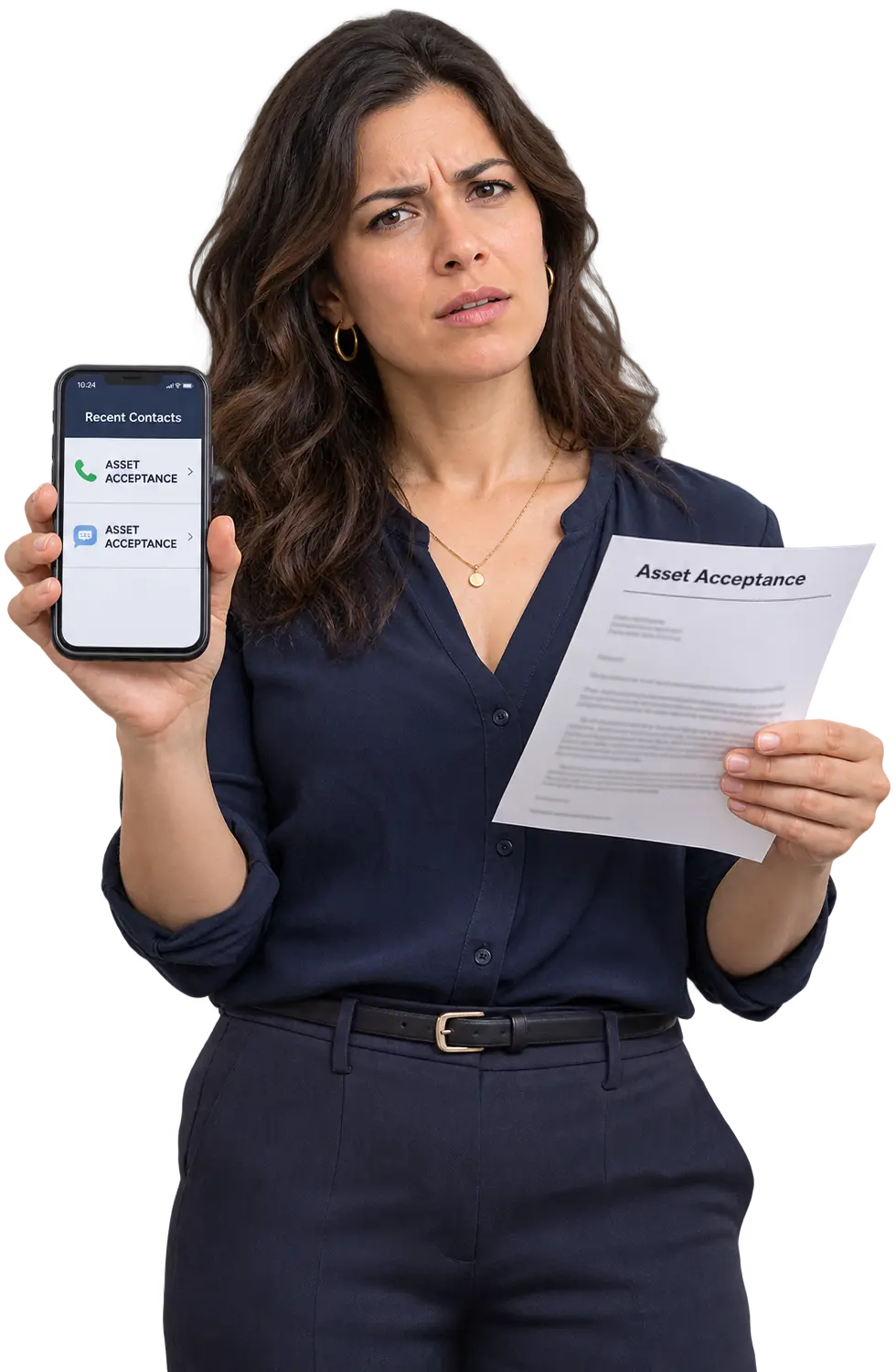
A letter about an old account. Asset Acceptance or Midland says it owns an account and wants payment. Check the validation notice before you pay anything.

Phone calls or texts. Collection calls must follow federal rules on timing and frequency. If calls continue after you asked them to stop, see robocalls and unwanted texts.

An old account on your credit report. If the details are wrong, see credit reporting errors.

A summons and complaint. Asset Acceptance has sued you. This is the most urgent situation, because a deadline is running.

A frozen bank account or wage garnishment. Asset Acceptance may already have a judgment, sometimes from a case you never knew about.
— old debt
Old debt? Watch out for “zombie debt”
Asset Acceptance accounts are often many years old. Before you pay, check how old the debt is:
➤ The 3-year lawsuit limit. Under New York’s Consumer Credit Fairness Act, most consumer credit lawsuits must be filed within 3 years.
➤ A payment does not restart the clock. In New York, a later payment does not revive the time to sue on most consumer credit debts.
➤ Letters about old debts. A collector should not suggest it can sue you on a debt that is too old to sue on.
➤ The credit report limit. A collection account can generally stay on your report for up to 7 years from when the original account first went delinquent.
Got a letter from Asset Acceptance? Check these first
01
The original creditor and account number
Do you recognize the account?
02
The amount
The notice should itemize the balance, including interest and fees since a set date.
03
The dispute deadline
You generally have 30 days from receiving the validation notice to dispute in writing. If you dispute in time, the collector must pause collection until it verifies the debt.

Sued by Asset Acceptance in New York: do this first
01
Find your deadline
You generally have 20 days to answer if the papers were handed to you in person, or 30 days if they were served another way. Some courts outside New York City have different deadlines.
02
Confirm the case exists
Search your name on WebCivil Local for New York City Civil Court and other local courts.
03
Do not ignore it
If you do not answer, Asset Acceptance can get a default judgment and then try to freeze your bank account or garnish your wages.
04
File an answer and raise your defenses
The answer is where defenses like the 3-year limit or lack of proof must be raised.
05
Get a free case review
Contact Us we can look at your papers and tell you which defenses may apply.
Read more about a debt collection lawsuit in New York.

What Asset Acceptance must prove in a New York lawsuit
New York’s Consumer Credit Fairness Act made debt buyers like Asset Acceptance show more at the start of a case. Compare your papers against this checklist:

That it owns your account
A debt buyer must show the chain of ownership from the original creditor to Asset Acceptance.
The account details
The complaint should state the original creditor, the last digits of the account number, the charge-off date and balance, and the date and amount of the last payment.
The agreement
The contract or account agreement should be attached to the complaint.
That the case is on time
Most consumer credit lawsuits must be filed within 3 years, and a later payment does not restart that clock.
That you were properly served
If you never received the papers, you may be able to challenge the case. See proper service.
If any of these are missing, that may be a defense.

— your burden of proof
How to fight an Asset Acceptance lawsuit: common defenses
➤ The debt is too old. Most consumer credit claims in New York must be filed within 3 years. This is often the strongest defense with older Asset Acceptance accounts.
➤ Asset Acceptance cannot prove it owns the account. Gaps in the chain of ownership, especially after the Encore purchase, can defeat the case.
➤ Missing or wrong account documents. The complaint must include required details and the agreement.
➤ The amount is wrong. Interest, fees or payments may not be counted correctly.
➤ It is not your debt. Mixed files, a relative’s account or identity theft.
➤ You were not properly served. Papers left with the wrong person or at the wrong address.
➤ Asset Acceptance broke the law while collecting. Some violations of the Fair Debt Collection Practices Act can support a counterclaim.
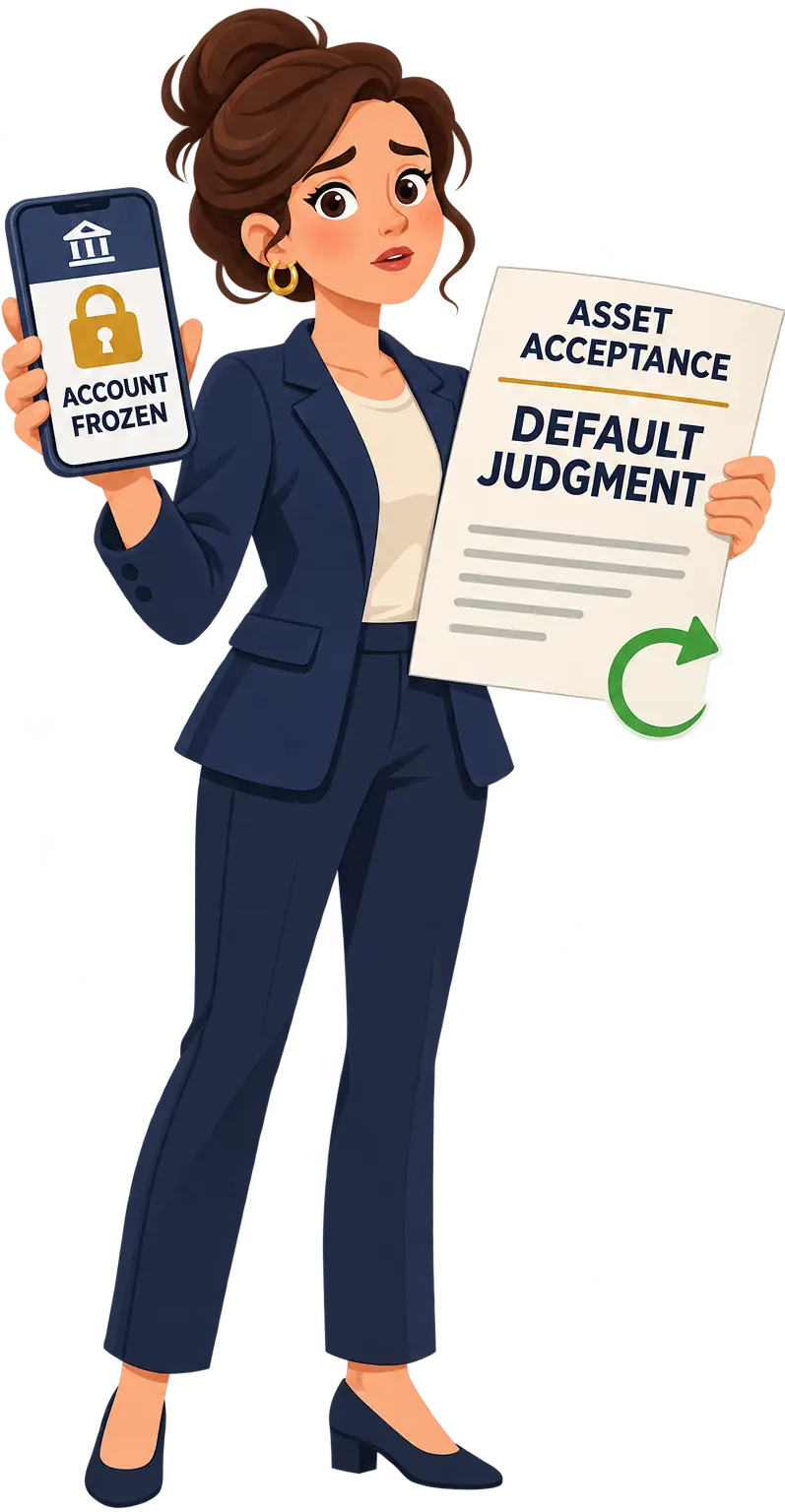
Already have a default judgment from Asset Acceptance?
Many people learn about an old lawsuit only when their bank account is frozen. You may still have options:
● Ask the court to vacate the judgment, for example if you were not properly served or you have a valid defense.
● Protect exempt money. In 2026, $4,080 in your account is protected if you live in New York City, Long Island or Westchester, and benefits like Social Security are generally exempt. See frozen bank account.
● Limit wage garnishment. See garnished wages.
Asset Acceptance on your credit report
A collection account can generally stay on your credit report for up to 7 years from when the original account first went delinquent. Selling the debt, even more than once, does not restart that clock. If Asset Acceptance or Midland reports the wrong balance, wrong dates or an account that is not yours, you can dispute it with the credit bureaus, and the Fair Credit Reporting Act may give you a claim if the errors are not fixed.
See credit reporting errors.

Should I settle with Asset Acceptance?
Settling can make sense, but check your defenses first. A debt that is too old or a case Asset Acceptance cannot prove may not need to be paid at all. If you do settle:
➤ Get every term in writing before you pay
➤ Make sure the agreement says the lawsuit will be dismissed and the balance resolved
➤ Make sure the agreement covers any related Midland or Encore account for the same debt
➤ Ask how the account will be reported to the credit bureaus
➤ Keep proof of every payment
➤ A forgiven balance may lead to a tax form 1099-C; ask a tax professional

Regulators have taken action against Asset Acceptance
$2.5m
FTC 2012
Civil penalty
The Federal Trade Commission, through the Department of Justice, charged Asset Acceptance with misrepresenting what consumers owed, not telling consumers when debts were too old to sue on, reporting inaccurate information to credit bureaus and not properly investigating disputes. Asset Acceptance paid a $2.5 million civil penalty, one of the largest the FTC had obtained in a debt collection case at the time, without admitting the charges. It also agreed to tell consumers when it would not sue on old debts.
consent order
CFPB, 2015
with encore and midland
The Consumer Financial Protection Bureau’s 2015 consent order against Encore Capital Group, Midland Funding and Midland Credit Management also covered Asset Acceptance Capital Corp.
These actions do not decide any individual case, but they show why it matters to check what Asset Acceptance can prove.
Can I sue Asset Acceptance?
Possibly. Asset Acceptance is a debt collector covered by the Fair Debt Collection Practices Act. If it harassed you, misstated what you owe, tried to collect a debt that was too old, or broke other rules, you may recover actual damages, up to $1,000 in statutory damages, and attorney’s fees. If it reported wrong information to the credit bureaus and did not fix it after a dispute, you may also have a claim under the Fair Credit Reporting Act. Review our FDCPA violations checklist.
Not sure if Asset Acceptance can prove its case?
Send us your papers. We can check them against New York’s requirements and explain your options.
Why work with Tariq Law PC?
Focused practice
We defend New Yorkers in debt collection lawsuits and bring claims under the FDCPA and FCRA.
Attorney involvement
Subhan Tariq, Esq. was admitted to the New York bar in 2014 and is a member of the National Association of Consumer Advocates (NACA). Learn more on his attorney profile and read client reviews.
Clear fees
We explain how fees work, in writing, before you hire us.
local
Our office is at 99 Park Avenue, Suite 1530, New York, NY 10016. We serve all five boroughs, Long Island, Westchester and clients throughout New York State.

Federal Consumer Rights Attorney
Specializes in federal consumer protection laws like FCRA, FDCPA, and EFTA. Represented thousands of consumers facing identity theft, mixed credit files, and post-bankruptcy reporting errors.

Communication
Always on your side.

Integrity
Honesty at our core.

Excellence
Pursuing the highest standards.
Tariq Law PC Reviews: What Our Clients Say
Our clients share their experiences working with a legal team dedicated to protecting their rights and pursuing the best possible outcome.
I was really at a point of giving up on my case and accepting my loss on this lawsuit. As a last resort I reached out to a few law firms and everyone refused to help me until I spoke with Tariq Law Firm. Subhan, Carlos, and Shahbaz were honest, set realistic expectations and then proceeded to exceed them! My case already went through the court and received a judgement against me that would require me to pay the debt collector more than what I was being sued for plus their court fees. To my amazement, Tariq's firm was able to turn that judgement around completely and force the Plaintiff to settle for less than a 1/4 of what the judgement required. I cannot highlight enough how great of an experience this was! I will recommend their firm to everyone I can who needs legal aid in the services they offer. I won't need this service in the future but if I ever find myself in a space where I do, this firm will be my FIRST call. I am so grateful for this team and their customer service. They are worth every penny! 10/10


I reached out to Tariq Law regarding a potential FDCPA claim. The firm replied quickly, examined my documents before our call, and arranged a consultation. Mr. Tariq offered a straightforward evaluation of my situation and clarified which violations might support a claim and which would not. He avoided exaggerating my case. Although I did not retain the firm, I prefer an honest response to a sales pitch. I suggest a consultation for anyone facing a debt collection issue.

I met with Mr Tariq about time barred debt lawsuit I was fighting Pro Se. When other offices wanted $400 just for the consult, Tariq Law did the consult for free and gave me some solid advice on how to settle. I’m still waiting on the outcome of my case but being able to get the advice of a lawyer in a day for free gave me the insight and confidence I needed to wrap my case up. Also, they respond FAST.

I highly recommend Tariq Law, PC! Subhan and Carlos were both incredibly professional, knowledgeable, and helpful throughout the entire process. They took the time to listen to my concerns, explain everything clearly, and made sure I understood what was happening every step of the way. Their communication and attention to detail really stood out, and I felt like my situations was genuinely being taken seriously. I’m very grateful for their assistance and would absolutely recommend Tariq Law, PC to anyone dealing with credit report issues, debt collection, or related financial matters. Excellent experience!

Amazing firm , very professional, respond to all questions and always available on the phone , email or text . Tariq and his assistant were really great during a very stressful time . Thank you again

I can't express how grateful I am to have Tariq Law as my consumer debt attorney. From the very first consultation, it was clear that I was in expert hands. His extensive knowledge of consumer debt laws and processes helped me understand my options better than I ever could have on my own. He took the time to explain everything thoroughly and patiently answered all my questions, which really eased my anxiety during a very stressful time. What really impressed me was his exceptional customer service. Tariq Law was always available when I needed guidance, and his commitment to my case was evident. He truly cares about his clients and goes above and beyond to ensure they feel supported. The scheduling process was also seamless. Appointments were flexible, accommodating my busy life, which made everything so much easier. If you're struggling with consumer debt, I highly recommend Tariq. He not only knows his field inside and out but also treats you with respect and kindness. Thank you for all your help! Not my first time using him and it won't be the last!!!

I highly recommend Tariq Law for anyone needing professional and reliable legal guidance. From the start, Subhan was incredibly helpful and knowledgeable, providing me with a clear and strategic plan to navigate my situation with confidence. The communication from the firm is outstanding. The intake manager was amazing—proactive, highly responsive, and kept me informed through every step of the process. In a situation where you need quick answers and genuine expertise, they delivered every time. I have nothing but positive things to say; they are a top-tier team that truly prioritizes their clients success.

I recently had a consultation with Attorney Subha Tariq regarding a complicated medical-debt dispute involving insurance, Medicaid, provider billing, and collection activity. I presented the five main documentary defenses I had gathered, and he took the time to review and discuss each one carefully. What impressed me most was how clearly he explained the important details. He helped me understand how the documents could support my position, what issues required more attention, and how the evidence should be organized if the dispute continues. He was patient, compassionate, and respectful throughout the conversation. I never felt rushed or dismissed, even though my case involves many documents and complicated facts. Attorney Tariq was also honest and practical. He did not make unrealistic promises, but he gave me a clearer understanding of my situation and the possible path toward resolving the debt issue. After speaking with him, I felt more informed, more organized, and more confident about protecting my family. I strongly recommend Attorney Subha Tariq to anyone facing a disputed debt or collection matter. He listens carefully, explains legal issues in a way that is easy to understand, and treats clients with genuine compassion and professionalism

I met with Subhan Tariq and was very impressed with his professionalism, responsiveness, and depth of knowledge. He took the time and answered my questions thoroughly, and provided clear, practical guidance without any pressure. I left the conversation feeling much better informed and with a clearer understanding of my options moving forward. I would highly recommend Subhan and his firm to anyone looking for thoughtful and knowledgeable legal counsel.

I can't thank this law firm enough for everything they did for me. The entire team was professional, knowledgeable, and supportive from beginning to end. They kept me informed throughout the process, answered all of my questions, and made me feel confident every step of the way. Thanks to their hard work and dedication, both of my cases were dismissed. I truly appreciate everything the team did for me and couldn't be happier with the outcome. I highly recommend this law firm to anyone looking for a team that genuinely cares about their clients and works hard to achieve the best possible results.

I have had a phenomenal experience working with Tariq Law, starting with their Intake team. After sending across all information pertaining to my case, I received a response back quickly and had a very helpful 50-minute consultation with Subhan Tariq and the full team. The team has been incredibly responsive over email and text, very helpful in refining and putting together all documents being sent out, very receptive to all question I have had throughout the process, incredibly organized, and very enjoyable to work with overall. I'm very grateful to have found an incredible legal team and would highly recommend.

I met with Mr Tariq about time barred debt lawsuit I was fighting Pro Se. When other offices wanted $400 just for the consult, Tariq Law did the consult for free and gave me some solid advice on how to settle. I’m still waiting on the outcome of my case but being able to get the advice of a lawyer in a day for free gave me the insight and confidence I needed to wrap my case up. Also, they respond FAST.

I want to thank Tariq Law PC for helping me resolve a legal matter I was dealing with. From the start, the team was professional, responsive, and made sure I understood every step of the process. Thanks to their guidance, my case was resolved successfully, and I couldn't be happier with the outcome. I highly recommend Tariq Law PC to anyone in need of legal assistance.

Tariq Law P.C. is professional, honest , and highly knowledgeable. They laid out their understanding of my case and advised me on the best strategies that would benefit the outcome of my cases. The staff worked diligently for over a year on my cases that yielded results beyond my expectations. Everyone who worked on my case from Subhan to Huzifah to Carlos were all profoundly professional, kept me abreast of the process, asked for my insight on matters and informed me on all aspects of my defense. I appreciate their support, hard work, and commitment to their clients and I’m glad I made the decision to be one of their clients. All the best.

Overall, my experience with Attorney Subhan and his intake team has been excellent. From the beginning until now, they have been very responsive and consistent in their communication through calls, texts, and emails. They always follow through on what they say and make sure to keep me updated on my case. I haven't had any issues so far, and I truly appreciate the level of support and professionalism. I would rate their service a 10 out of 10 and would definitely recommend them to my friends and family."

I’m very grateful to Tariq Law PC for their professional and dedicated assistance with my credit report issue. They were knowledgeable, responsive, and kept me informed throughout the process. Most importantly, my credit reports were successfully corrected. I truly appreciate their hard work and highly recommend Tariq Law PC! Highly professional and efficient. They helped us navigate numerous challenges successfully. I'm very satisfied with their services. We are so grateful for your firm's support. You've helped us solve so many problems with great efficiency. Thank you for your excellent work

I had a very positive experience working with Subhan Tariq and the team at Tariq Law. They were exceptionally efficient, prompt, and helpful throughout the process. Communication was straightforward, and they provided clear, direct answers right away. I highly recommend their legal services to anyone looking for professional and responsive counsel.

I am incredibly grateful for the outstanding service I received from Tariq Law. Having consulted with him three times now, I can confidently say that his wealth of knowledge in consumer debt law is truly impressive. What really sets him apart is his patience and willingness to listen to my concerns. He took the time to explain my options clearly, ensuring I understood each step of the process. His customer service is unmatched; I always felt valued and supported during our consultations. Additionally, scheduling appointments with him is a breeze. It's convenient and really helped me manage my time effectively, which made the entire experience much less stressful. If you're looking for a knowledgeable and approachable consumer debt attorney, I highly recommend Tariq Law! iDIGGit Promising Poodles, Owner

The entire team was so helpful, from getting an appointment to actually speaking with the lawyer. The intake team was really quick to respond and helped with any and all questions I had. Subhan was amazing too, and really broke everything down in an easy to understand way. Would 100% recommend to anyone needing their services.

I had an excellent experience with Tariq Law, P.C. The entire staff, including Carlos, handled my case with extreme efficiency. They resolved my legal matter immediately, and I was thrilled to achieve a resolution without having to pay the creditor back. I highly recommend their services to anyone in need of expert legal representation.

Great Law office. Gave me a free consultation concerning my identity theft/fruad case. Sarah the intake manger and Subhan Tariq were extremly helpful and effectively communicated to me what to do in my situtation. I highly recommend this law firm.

Highly recommend this law firm. I was a victim of aggressive and shady debt collectors and Tariq Law helped me stop their harassment and to solve my case. Shout out to Subhan, Carlos, and the rest of the team. Don’t even look elsewhere, this is the place. Thank you guys!

scheduled a consultation with this firm not realizing they only represent clients in New York, while I’m located in Los Angeles. Despite that, the attorney provided me with a generous amount of guidance, shared referrals in my area, and even refunded my consultation fee. You don’t find service like this anymore. The intake team was also incredibly responsive and processed my refund right away. I highly recommend this firm.

Tariq law team is very kind, helpful, and cooperative. Also, the attorney is very professional ,informative and knowledgable and can provide an outstanding solution to any legal problem in his field of expertise in a very professional manner

Frequently asked questions
Is Asset Acceptance still in business?
Asset Acceptance, LLC still exists as a company owned by Encore Capital Group, which bought it in 2013. Some older Asset Acceptance accounts may now be collected by Midland Credit Management, another Encore company.
Is Asset Acceptance legit or a scam?
Asset Acceptance, LLC is a real debt buyer. Because its accounts are often old, scammers sometimes use its name. Check any letter against your own records and ask for a validation notice before you pay.
Why is Asset Acceptance suing me?
Asset Acceptance buys accounts that were first owed to a bank, utility, phone company or other creditor, then sues in its own name. The complaint should name the original creditor. If you do not recognize the account, it may be an error or identity theft.
How long do I have to answer an Asset Acceptance lawsuit in New York?
Generally 20 days if the papers were handed to you in person, or 30 days if they were served another way. Some courts outside New York City have different deadlines. If you miss the deadline, Asset Acceptance can ask for a default judgment.
Can Asset Acceptance sue me for a debt that is more than 3 years old?
Under New York’s Consumer Credit Fairness Act, most consumer credit lawsuits must be filed within 3 years, and a later payment does not restart that clock. Asset Acceptance accounts are often old, so check the dates carefully.
What does Asset Acceptance have to do with Midland?
Encore Capital Group owns both. After Encore bought Asset Acceptance in 2013, some Asset Acceptance accounts may be serviced by Midland Credit Management, so you may see both names on letters or reports.
Can I sue Asset Acceptance?
Possibly. If Asset Acceptance misstated what you owe, tried to collect a debt that was too old, harassed you, or reported wrong information to the credit bureaus, you may have a claim under the FDCPA or FCRA.
Ready to Talk About Your Case?
Whether you’ve been sued for a debt, found an error on your credit report, or had a bank deny your fraud claim, we can review your situation and explain your options.
Email: [email protected]
Phone: (866) 885-8529
AS SEEN ON!













Tariq Law, PC. is located in the heart of New York City at 99 Park Avenue, footsteps from the iconic Grand Central Terminal in Midtown Manhattan. We serve clients primarily in New York, New Jersey, and in federal courts across the United States.
In order to evaluate your particular circumstances, please reach out to us to schedule an individual case review. Using this site or communicating with an attorney does not establish an attorney-client relationship, which can only be established in writing and signed by the lawyer and the client.
Prior results do not guarantee a similar outcome. This website is for informational purposes only.
Attorney Advertising.
NYC's premier consumer protection law firm. We fight for justice in FCRA, FDCPA, identity theft, and debt defense cases with unmatched expertise and tenacity.
Email: [email protected]
Phone: (866) 885-8529
Location: 99 Park Avenue New York, NY 10016


subscribe Our Newletter
Copyright 2026. TariqlawPC. All rights reserved. Read more from Subhan at subhantariq.com