
New York consumer protection lawyer
New York Identity Theft Lawyer for Victims of Credit and Bank Fraud
Tariq Law PC is a New York consumer protection law firm that represents identity theft victims, not people accused of the crime. Attorney Subhan Tariq helps clients remove fraudulent accounts from credit reports, fight debt collectors and lawsuits over debts they never owed, and recover unauthorized bank or app transfers under the FCRA, FDCPA and EFTA.

Focused on New York consumer protection law

Helping victims of credit and bank fraud

Compassionate, practical legal guidance
Focused on New York consumer protection law
Helping victims of credit and bank fraud
Compassionate, practical legal guidance
Finding out that someone used your name is upsetting.
Discovering that someone opened an account, charged purchases, or used your bank information can be stressful and overwhelming. You may face collection calls, denied credit, or unfamiliar charges. We help New York consumers understand their rights and take action to stop the harm, remove fraudulent accounts, and recover from identity theft.

An unfamiliar account
You see an account you didn't open.

Credit denied or higher rates
You're denied credit or face higher interest rates.

A collection notice
You receive calls or letters about a debt that isn't yours.

Unauthorized bank transaction
You see a charge or transfer you didn't make.
What does an identity theft lawyer do for victims?
An identity theft lawyer for victims makes the companies involved follow the law. The thief is usually unknown or out of reach. The credit bureaus, banks, lenders and debt collectors are not, and each one has legal duties once you report the fraud.

Investigate your accounts, credit reports, and financial records to identify fraudulent activity and determine how it happened.


Review and analyze records
Look at your credit reports, bank statements, and account histories.

Dispute fraudulent accounts
Challenge and work to have unauthorized accounts removed from your credit reports.

Document your damages
Help you gather and organize evidence of identity theft and related losses.
Pursue legal remedies
Use consumer protection laws to stop collection activity and seek to hold the responsible parties accountable.
What should I do first if my identity was stolen in New York?
Move quickly, put everything in writing, and keep copies. These steps follow guidance from the FTC and the federal statutes.
-
Step 1: Pull all three credit reports.
Get free reports from Equifax, Experian and TransUnion at AnnualCreditReport.com. Circle every account, inquiry and address you do not recognize. Our page on how to get free credit reports walks you through it.
-
Step 2: Freeze your credit.
A credit freeze is free at all three bureaus. It stops new creditors from pulling your report until you lift it. The FTC says a freeze requested online or by phone must be placed within one business day.
-
Step 3: Place a fraud alert.
Contact one bureau and it must notify the other two. An initial alert lasts one year. If you file an identity theft report, you can get an extended alert that lasts seven years.
-
Step 4: Report the theft.
File a report at IdentityTheft.gov and get your FTC Identity Theft Report and recovery plan. You can also file a police report with your local NYPD precinct or police department. Some companies ask for one.
-
Step 5: Ask the bureaus to block the fraud.
Send each bureau a Section 605B block request with proof of identity, your identity theft report, the list of fraudulent items, and a statement that they are not yours.
-
Step 6: Contact each company where the thief opened or used an account.
Tell their fraud department in writing, close the accounts, and ask for the account records you are entitled to.
-
Step 7: Report bank or app fraud right away.
Report unauthorized debit card, ATM, Zelle or other electronic transfers to your bank within two business days of learning about them if you can. In all cases, report within 60 days of the statement that shows them.
-
Step 8: Do not ignore collectors or court papers.
Dispute the debt in writing, and never let a court deadline pass.
-
Step 9: Keep a file.
Save letters, envelopes, emails, call notes, denial letters and receipts for costs you paid. These records can become evidence of your damages.
-
Step 10: Talk to a lawyer if a company refuses to fix the problem.
If the account comes back, a company verifies a fraudulent debt, or a bank denies your claim, you may have a legal claim.
How does the FCRA protect identity theft victims?
The Fair Credit Reporting Act gives identity theft victims several specific rights.
Qualifying information must be blocked within
4
business days
If you provide the credit bureau with an identity theft report, they must block qualifying identity-theft information from your credit report within 4 business days while they investigate.

Investigate within 1 or 7 days
Credit bureaus must investigate your claim, usually within 30 days. In some cases, they must complete the investigation within 7 business days.

30 days
In most cases, credit bureaus must complete their investigation within 30 days and remove any information that cannot be verified or that resulted from identity theft.
furnisher duties
If information is found to be resulting from identity theft, credit bureaus must notify the furnisher (such as a bank or credit card issuer), and the furnisher must stop reporting the information and remove it from your account.

No mixed or reinserted information
Information resulting from identity theft cannot be mixed with other information and cannot be reinserted into your credit report.
If a bureau "verifies" an account you never opened, see our pages on credit reporting errors, your rights under the FCRA and common types of FCRA violations.
Can I sue a credit bureau or bank over identity theft accounts?
Yes, in many cases. The FCRA lets you sue a credit bureau or furnisher that willfully or negligently fails to follow the law.
➤ Willful violations (15 U.S.C. 1681n): actual damages, or statutory damages of $100 to $1,000, plus possible punitive damages, court costs and reasonable attorney's fees.
➤ Negligent violations (15 U.S.C. 1681o): actual damages, court costs and reasonable attorney's fees.
➤ Deadline (15 U.S.C. 1681p): generally the earlier of 2 years after you discover the violation or 5 years after it happened.
Actual damages can include denied credit, higher interest, lost housing or job opportunities, out-of-pocket costs and emotional distress. One point matters here. Your strongest claim against a lender usually arises after you dispute through the credit bureau and the lender fails to investigate properly. That is one reason the order of your disputes matters. Learn more about legal remedies for FCRA violations.
Did a credit bureau refuse to remove fraud?
If you sent proof and the account is still there, the law may be on your side. Send us your reports and dispute letters for a review.
What if a debt collector is calling or suing me over an identity theft debt in New York?
You have rights under federal and New York law. If a debt collector is contacting you about a debt that isn't yours, here's what to do:

Tell the collector it's identity theft
Inform the collector in writing that the debt is the result of identity theft and that you are not responsible.

Provide supporting documents
Send a copy of your identity theft report and any other relevant documentation.

Request that they stop contact
Ask the collector to stop calling or writing while they investigate.

Know your rights
Debt collectors must follow the Fair Debt Collection Practices Act (FDCPA) and cannot continue to pursue a debt they know or should know is not yours
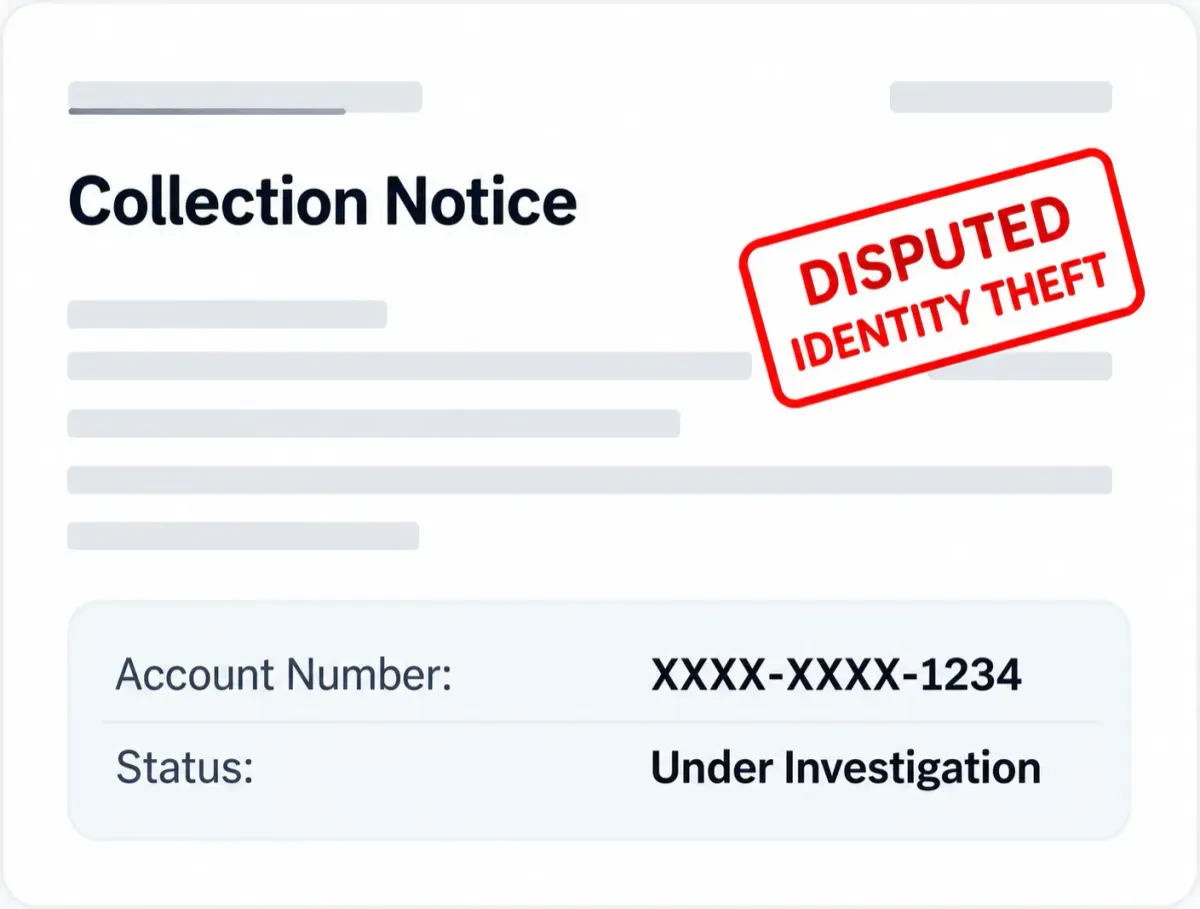

You have rights.
You can tell debt collectors to stop contacting you, dispute the debt, and seek damages if they continue to pursue a debt they know or should know is the result of identity theft.
What if a thief took money from my bank account or Zelle?
If someone unauthorized took money from your bank account or used Zelle, your rights and protections depend an how quickly you report it.
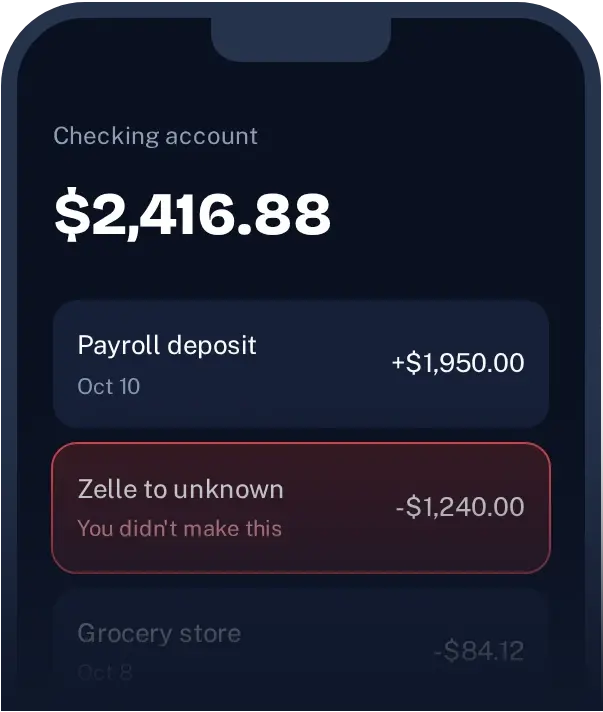
$0
If you report an unauthorized transfer within 2 business days, you generally won't be liable for any losses.
$50
If you report it after 2 business days but within 60 days, your liability is generally limited to $50.
$50
If you report it after 60 days but within one year, your liability is generally limited to $500.
no limit
If you report it more than one year after the unauthorized transfer, your liability may not be limited.
These limits may vary depending on your bank's policies and the specific circumstances, such as whether you were negligent. It's important to report unauthorized transfers as soon as possible and work with an experienced attorney to protect your rights.
Why work with Tariq Law PC?
We focus on helping New York consumers facing identity theft, credit report errors, and related financial harm.
Consumer protection focus
We focus on New York consumer protection law and work to hold credit bureaus, banks, and collectors accountable.
Direct attorney guidance
You'll work directly with an experienced attorney who understands identity theft cases and your rights under federal and state law.

Evidence-first strategy
We review your records, identify violations, and build a strategy based on the facts and the law.
No empty promises
We provide honest guidance about your options and what to expect, so you can make informed decisions about your case.

Federal Consumer Rights Attorney
Focused on helping New York consumers understand their rights, hold responsible parties accountable, and move forward after identity theft.
What documents should I bring to a consultation?
Bringing the right documents can help us understand your situation and provide more informed guidance.

Credit reports

Account or inquiry records

Denial letters

Identity theft reports

Dispute correspondence

Bank statements or transaction records

Frequently asked questions
Here are answers to some common questions about identity theft and our legal services.
Do I have to pay debts that an identity thief opened in my name?
No. You are not responsible for debts that a thief created without your permission. You do need to dispute them in writing with the creditor, any debt collector and the credit bureaus, and keep proof that you did.
How long does a credit bureau have to block identity theft information?
Under FCRA Section 605B, a credit bureau must block the information within 4 business days after it receives proof of your identity, an identity theft report, the list of fraudulent items, and your statement that they are not yours.
Is a credit freeze or a fraud alert better?
A freeze gives stronger protection because new creditors cannot pull your report until you lift it. A fraud alert asks creditors to verify your identity first. Both are free, and many victims use both.
Can I sue if fraudulent accounts stay on my credit report?
Often, yes. If a bureau or lender fails to follow the FCRA after you dispute, you may recover actual damages, statutory damages of $100 to $1,000 for willful violations, possible punitive damages and attorney's fees.
How long do I have to file an FCRA lawsuit?
Generally, the earlier of 2 years after you discover the violation or 5 years after the violation happened. Talk to a lawyer early so you do not lose a claim.
A collector sued me in New York for a debt that is not mine. What should I do?
Do not ignore the papers. File an answer by the deadline and raise identity theft as a defense. Under New York's Consumer Credit Fairness Act, the creditor must attach the account agreement, and most consumer credit suits must be filed within 3 years.
Will my bank refund money a thief took from my account?
Often, if you report on time. Under the EFTA and Regulation E, your liability can be capped at $50 or $500 depending on how fast you report, and you generally have 60 days from the statement date to report.
Do you represent people charged with identity theft?
No. Tariq Law PC represents victims of identity theft in consumer protection matters. If you have been charged with a crime, please contact a criminal defense attorney.
Ready to Talk About Your Case?
Whether you’ve been sued for a debt, found an error on your credit report, or had a bank deny your fraud claim, we can review your situation and explain your options.
Email: [email protected]
Phone: (866) 885-8529

NYC's premier consumer protection law firm. We fight for justice in FCRA, FDCPA, identity theft, and debt defense cases with unmatched expertise and tenacity.
Email: [email protected]
Phone: (866) 885-8529
Location: 99 Park Avenue New York, NY 10016


