New York TCPA Lawyer for Robocalls, Spam Texts and Debt Collector Calls
Tariq Law PC is a New York consumer protection law firm that represents people harassed by robocalls, unwanted texts and debt collector calls. Under the Telephone Consumer Protection Act (TCPA), you may recover $500 for each illegal call or text, or up to $1,500 if the violation was willful. We also review collector calls under the FDCPA.
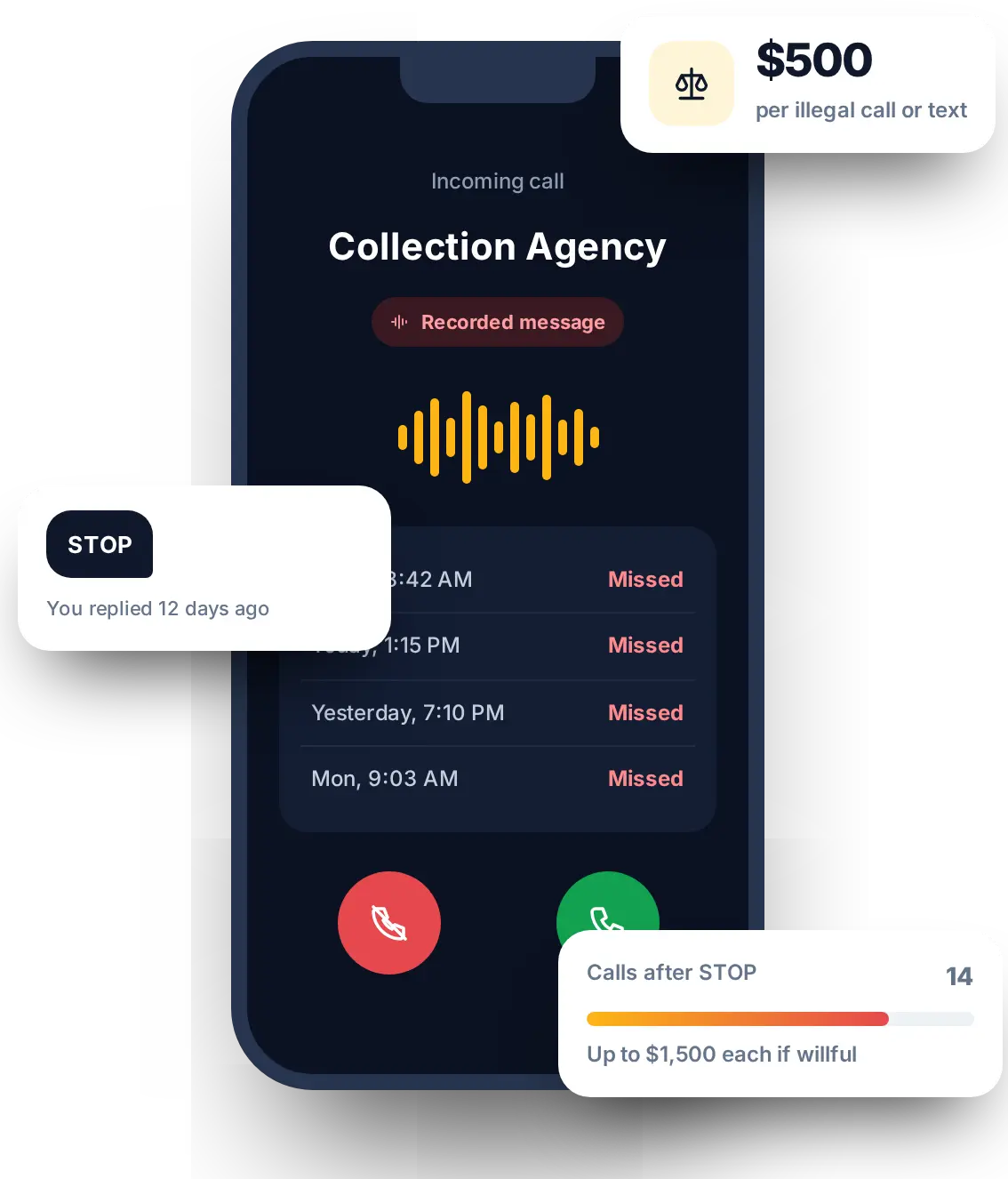
Your phone rings again. It is the same recorded voice, the same collection agency, or a company you already told to stop. Some calls are just annoying. Others break federal and New York law, and the law puts a dollar amount on each one. This page explains which calls and texts are illegal, what a claim may be worth, and what to save before you talk to a lawyer.
Still getting calls after you said stop?
Tell us who is calling and how often. We can review your call log, voicemails and texts and explain your options.
Still getting calls after you said stop?
Tell us who is calling and how often. We can review your call log, voicemails and texts and explain your options.
Your phone rings again. It is the same recorded voice, the same collection agency, or a company you already told to stop. Some calls are just annoying. Others break federal and New York law, and the law puts a dollar amount on each one. This page explains which calls and texts are illegal, what a claim may be worth, and what to save before you talk to a lawyer.
Can I sue for robocalls or unwanted texts?
Often, yes. The TCPA lets you sue a company that calls or texts you in a way the law does not allow. You do not need to prove you lost money. The law sets damages per call or text, so repeated violations can add up.
$500
Set by law for each illegal call or text
You may have a claim if:
You received prerecorded or artificial voice calls on your cell phone without your consent
A company kept calling or texting after you told it to stop
You received calls meant for someone else, such as a prior owner of your number
Your number is on the National Do Not Call Registry and a telemarketer called you more than once in 12 months
A debt collector called you at prohibited times or more often than federal rules allow
What Calls and Texts are illegal Under The TCPA?
The TCPA and the FCC's rules restrict how businesses can reach you by phone. The most common violations we see are:

Calls after you revoke consent.
Instead of “Since April 11, 2025, the FCC requires callers to honor that request within 10 business days”
say: You have the right to take back your consent to receive automated calls or text messages at any time. However, a historic September 30, 2026 FCC ruling changed how opt-outs must be handled:
✔ The 10-Business-Day Window:
Senders are strictly required to honor your valid opt-out request within 10 business days of receiving it. (This rule has been active since April 11, 2025).
✔ The Exclusive Method Rule:
Senders can now designate a single, exclusive method for opt-outs—such as replying STOP to a text. If a business clearly discloses their designated channel, they are no longer legally required to honor random or verbal opt-out requests.
✔ Guaranteed Opt-Out Keywords:
If text messaging is used, the FCC requires systems to recognize standard words like STOP, QUIT, END, REVOKE, OPT OUT, CANCEL, or UNSUBSCRIBE as automatic, valid revocations.
✔ The One-Text Confirmation Rule:
Senders are permitted to send one final confirmation text within 5 minutes of your opt-out. This text cannot contain any marketing, promotions, or upselling
✔ Category-Specific Choices:
You can now choose to opt out of marketing messages while still keeping critical informational alerts (like shipping or billing updates) active.
Protect Your Rights: Always use the company’s designated opt-out method (like replying STOP). If they continue to contact you after 10 business days, save the messages and call our firm—you may be entitled to cash compensation.

Prerecorded or artificial voice calls.
Calls to a cell phone that use a recorded or computer-generated voice need your prior express consent. Marketing calls need prior express written consent.

Do Not Call violations
Telemarketers may not call a residential number on the National Do Not Call Registry. If you receive more than one such call within 12 months from the same company, you may be able to sue.


Calls at the wrong hours
Telemarketers may not call before 8 a.m. or after 9 p.m. your local time.


Wrong number calls
Consent from a former owner of your number does not count as your consent. Recorded collection calls meant for someone else can violate the TCPA.

The FCC explains these rules in its consumer guide.
What if a debt collector is robocalling or texting me?
Debt collectors must follow two sets of rules: the TCPA and the Fair Debt Collection Practices Act (FDCPA). Many of our robocall cases start with a collection agency.
➤ Prerecorded collection calls: A collector that uses recorded messages to call your cell phone needs consent. If you revoked it, or the calls are meant for someone else, the TCPA may apply.
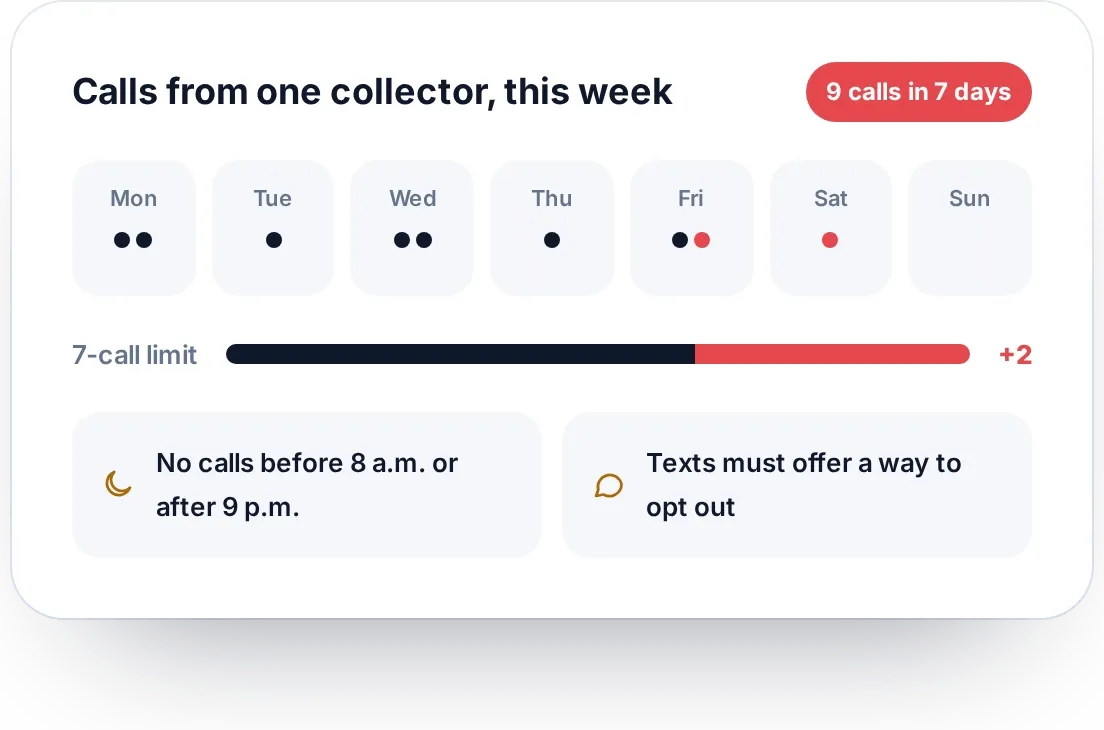
➤ Too many calls: Under the CFPB's Regulation F, a collector is presumed to be harassing you if it calls more than 7 times within 7 days about a debt, or calls within 7 days after speaking with you.
➤ Calling hours: Under the FDCPA, collectors generally may not call before 8 a.m. or after 9 p.m.
➤ Texts and emails: Collectors that text or email you must give you a clear and simple way to opt out.
Learn more about debt collector harassment, review our FDCPA violations checklist, or read what to do if you have been sued by a debt collector.
I Told Them to Stop and They Kept Calling. Is That illegal?
It can be. You have the right to revoke consent to robocalls and robotexts. You do not need special words. Replying STOP, saying "stop calling me" on a call, or sending a written request can all count. The FCC's rule requires the company to honor your request within 10 business days.

Write down the date and time you said stop, and save any reply texts that confirm it. Calls or texts that continue after that point are often the strongest part of a TCPA claim.

How much is a TCPA claim worth?
The TCPA sets damages for each violation:
$500 per illegal call or text, or your actual losses if higher
Up to $1,500 per call or text if the court finds the company acted willfully or knowingly
For example, 10 illegal recorded calls could mean $5,000, or up to $15,000 if the violations were willful. Every case depends on its facts, and not every unwanted call is a violation. If a debt collector also broke the FDCPA, you may recover up to $1,000 in statutory damages under that law, plus actual damages and reasonable attorney's fees.

Do I still have a case after recent court decisions?
Instead of "In 2025, the Court ruled in McLaughlin Chiropractic v. McKesson that judges do not have to follow the FCC's reading...
" say: On June 20, 2025, in McLaughlin Chiropractic v. McKesson, 23-1226, the Supreme Court held the Hobbs Act does not bind district courts to FCC orders. Courts must independently interpret the TCPA with 'appropriate respect' to FCC views. This opens prior FCC guidance to challenge."

Claims that remain strong include:
An attorney can tell you which of these fits your situation.
Prerecorded or artificial voice calls to your cell phone without consent
Calls that continue after you revoked consent
Recorded calls meant for someone else (wrong-number calls)
Repeated telemarketing calls to a number on the Do Not Call Registry
TCPA vs. FDCPA vs. New York law: which one applies?
| TCPATelephone Consumer Protection Act | FDCPAFair Debt Collection Practices Act | New York GBL 399-pNew York General Business Law | |
|---|---|---|---|
| Who it covers | Any company that calls or texts | Third-party debt collectors | Callers using automatic dialing-announcing devices |
| Common violations | Prerecorded calls without consent, calls after STOP, Do Not Call calls | Harassment, too many calls, calls at prohibited times | Recorded calls that break New York's device rules |
| Damages | $500 per violation, up to $1,500 if willful | Actual damages, up to $1,000 statutory, attorney's fees | Greater of actual damages or $50, up to $1,000 if willful, attorney's fees |
| Time to file | Generally 4 years | 1 year | Ask an attorney |
One set of calls can break more than one law. Read more about your rights as a consumer.
Not sure which law applies?
Send us your call log and voicemails. We can review them under the TCPA, the FDCPA and New York law together.
What evidence should I save?
The strongest TCPA cases are built on records. Start saving these today:
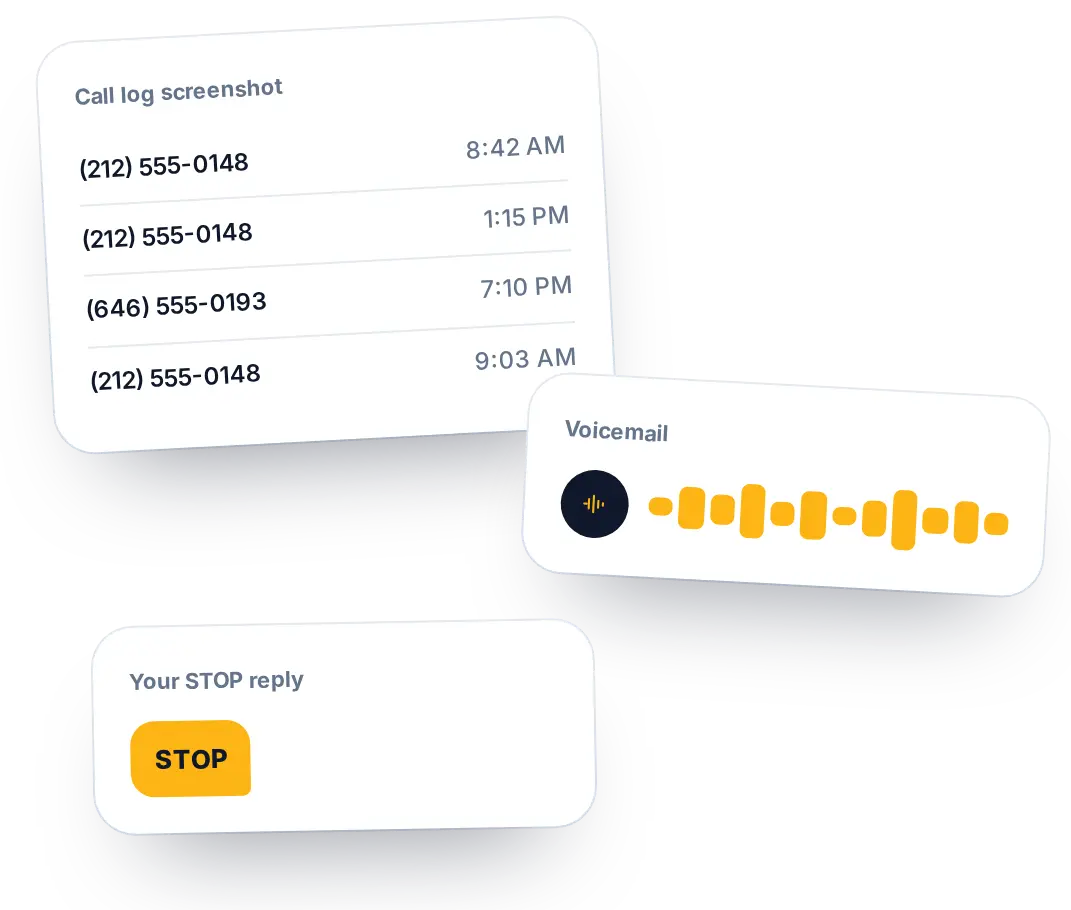

Screenshots of your call log showing dates, times and numbers
Voicemails, especially recorded or computer-voice messages

Text messages, including your STOP replies and any responses

Notes on when you told a caller to stop, and what they said
Proof of the date your number was added to the Do Not Call Registry

Collection letters or account names the caller mentioned
Your phone bill, if it shows the calls
Do not delete messages, even the annoying ones. Each one may be a separate violation.
How do I stop robocalls and report them?
You can take steps to cut down unwanted calls while you protect your rights:
01
Register your number at the National Do Not Call Registry
02
Reply STOP to unwanted texts, and keep a screenshot
03
Turn on call blocking or spam filtering from your carrier
04
File a complaint with the FCC, or report it to the FTC
05
File a complaint with the FCC, or report it to the FTC
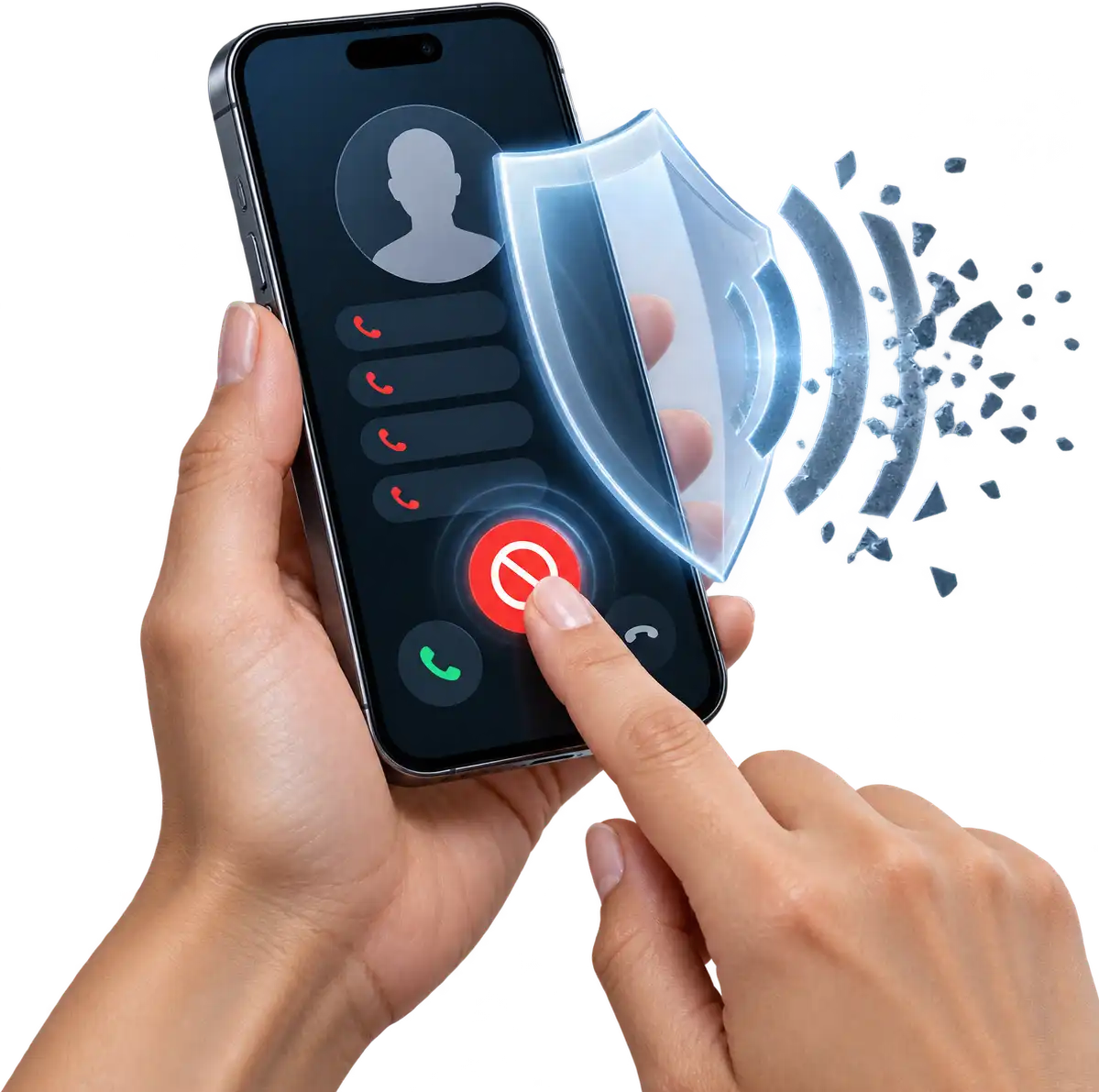
Reporting does not cancel your right to sue. Keep your records either way.
Why work with Tariq Law PC?
We focus on helping New York consumers facing TCPA and FDCPA, and related financial harm.
Focused practice
We handle consumer protection cases under the TCPA, FDCPA, FCRA and EFTA, including debt collection defense, so we can review robocalls and the debt behind them together.
Attorney involvement
Subhan Tariq, Esq. was admitted to the New York bar in 2014 and is a member of the National Association of Consumer Advocates (NACA). He was selected to Super Lawyers Rising Stars from 2022 to 2026. Learn more on his attorney profile and read client reviews.
Clear fees
We explain how fees work, in writing, before you hire us. The FDCPA lets a court order a debt collector that broke the law to pay reasonable attorney's fees.

Federal Consumer Rights Attorney
Focused on helping New York consumers understand their rights, stop unwanted robocalls and texts, and hold callers and debt collectors accountable under the TCPA and FDCPA.
Frequently asked questions
Can I sue a company for robocalls?
Often, yes. Under the TCPA, you may sue a company that made prerecorded calls to your cell phone without consent, kept calling after you said stop, or called a number on the Do Not Call Registry more than once in 12 months.
How much can I get for each illegal robocall?
The TCPA provides $500 per illegal call or text, or up to $1,500 if the company acted willfully or knowingly. The amount depends on how many calls broke the law.
Is it illegal for a company to keep calling after I said stop?
It can be. You can revoke consent to robocalls and robotexts by any reasonable method, such as replying STOP. Since April 11, 2025, the FCC requires companies to honor that request within 10 business days.
Can debt collectors robocall my cell phone?
Only with your consent, and they must stop if you revoke it. Debt collectors must also follow the FDCPA, which limits calling hours and how often they can call.
How many times can a debt collector call me in a week?
Under Regulation F, a debt collector is presumed to be harassing you if it calls more than 7 times within 7 days about a debt, or calls within 7 days after speaking with you about it.
I keep getting calls for someone else. Can I sue?
Possibly. Consent given by a former owner of your number does not count as your consent. Recorded calls meant for someone else can violate the TCPA.
Are spam texts covered by the TCPA?
Some are. Texts sent after you replied STOP or texts sent with certain automated systems may break the law. Some courts have recently ruled that texts do not count for Do Not Call claims, so text-only cases need a closer review.
How long do I have to file a TCPA claim?
Generally 4 years from the call or text. FDCPA claims against debt collectors must usually be filed within 1 year. Talk to a lawyer early so you do not lose a claim.
Ready to Talk About Your Case?
Whether you’ve been sued for a debt, found an error on your credit report, or had a bank deny your fraud claim, we can review your situation and explain your options.
Email: [email protected]
Phone: (866) 885-8529
NYC's premier consumer protection law firm. We fight for justice in FCRA, FDCPA, identity theft, and debt defense cases with unmatched expertise and tenacity.
Email: [email protected]
Phone: (866) 885-8529
Location: 99 Park Avenue New York, NY 10016


