Add a Title Here
Tariq Law PC
Debt Collectors Harassing You? You Have Legal Rights — And We Enforce Them.
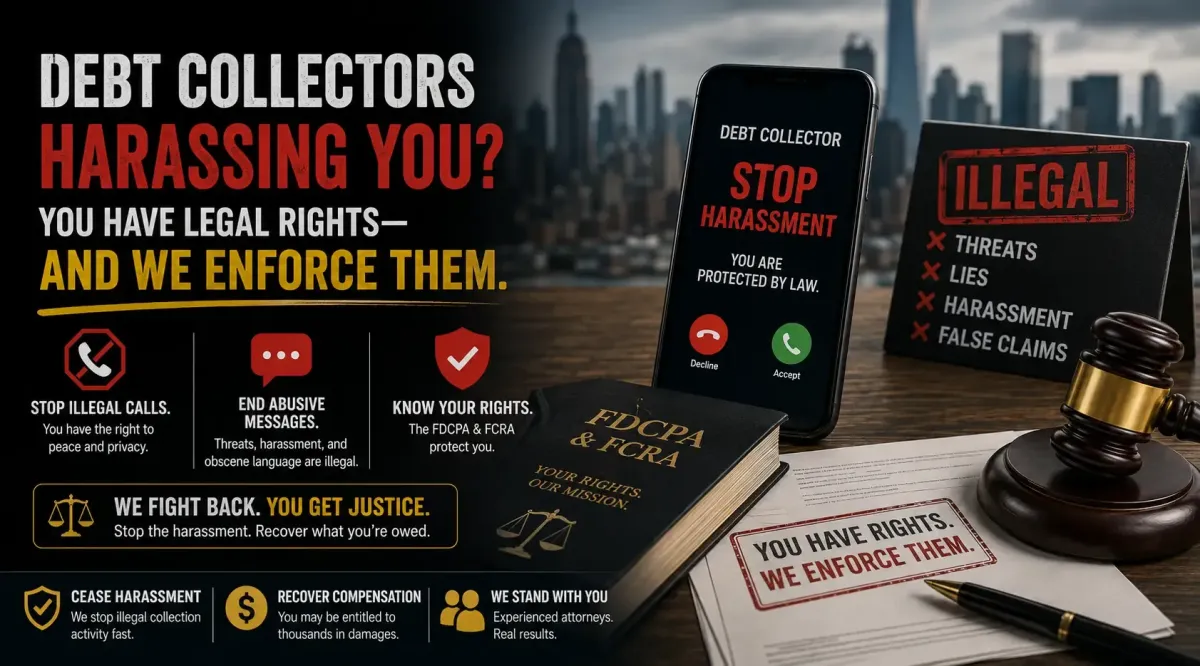
Debt collection harassment is illegal. Yet thousands of people receive threatening calls, abusive messages, and false debt claims every day — many targeting communities that don't know their legal protections.
Under the Fair Debt Collection Practices Act (FDCPA) and the Fair Credit Reporting Act (FCRA), you have powerful rights against abusive and deceptive debt collectors. Our debt collection harassment attorneys fight to stop illegal collection activity and recover compensation you're owed.
What Is Illegal Debt Collection?
Not all aggressive collection activity is legal. Federal law draws a clear line. Debt collectors cannot:
➤ Call before 8 AM or after 9 PM
➤ Use threats, intimidation, or abusive language
➤ Contact you at work after being told not to
➤ Claim to be lawyers or government officials when they're not
➤ Threaten arrest or legal action they don't intend to take
➤ Attempt to collect debts you don't owe or that have already been paid
➤ Report inaccurate debts to your credit report
If any of these have happened to you, you may have a legal claim — even if you actually owe the debt.
Common DESIS Cases We Handle
Our attorneys regularly represent clients in cases involving:
Harassment Calls and Threats Repeated, aggressive phone calls — especially to family members, neighbors, or employers — are a direct FDCPA violation.
False or Inflated Debt Amounts Collectors sometimes add fees, interest, or penalties that are not legally owed. We challenge every number.
Zombie Debt Collection Old, time-barred debts that collectors attempt to revive — often on debts that have passed the statute of limitations or were previously settled.
Debts Reported After Discharge If a debt was discharged in bankruptcy, it cannot legally be collected or reported on your credit. Many collectors continue anyway.
Mistaken Identity / Wrong Person You may be contacted for a debt belonging to someone with a similar name or the same address. We stop the harassment and correct your record.
Credit Report Damage from Illegal Collections Unlawful collection attempts often come with false entries on your credit report. We dispute both — the harassment and the damage it caused.
Why Our Community Trusts Us
We understand the unique pressures faced by immigrant and South Asian families when dealing with debt collectors. Language barriers, fear of authorities, and unfamiliarity with U.S. consumer rights laws make our communities a frequent target of illegal collection tactics.
Our team has helped hundreds of Desi families:
➤ Stop harassing calls immediately
➤ Remove false collection accounts from credit reports
➤ Recover statutory damages — at no out-of-pocket cost
Your Rights Under the FDCPA
The Fair Debt Collection Practices Act gives every consumer the right to:
● Demand that a debt collector stop contacting them
● Request written verification of the debt
● Sue for violations — even if the underlying debt is valid
If your rights were violated, you may be entitled to:
● Actual damages (emotional distress, lost wages)
● Statutory damages up to $1,000 per violation
● Attorney's fees — paid by the collector, not you
Protect Your Rights — Start Your FDCPA Claim Today.
Frequently Asked Questions
1. Can a debt collector contact my family members?
Generally, no. Collectors can only contact third parties to locate you — and even then, they cannot disclose the debt. Repeated third-party contact is typically a violation.
2. What if I don't recognize the debt they're collecting?
Request written verification immediately. You are legally entitled to it within 5 days of first contact. Do not pay anything until you confirm the debt is valid and belongs to you.
3. Can I sue a debt collector even if I owe the money?
Yes. The FDCPA applies to how collectors behave — not whether the debt exists. Illegal collection tactics are actionable regardless of the underlying balance.
4. Will this hurt my credit score?
If illegal collection activity has already been reported to the bureaus, we dispute it simultaneously. Winning an FDCPA case does not negatively affect your credit.
5. How much does it cost to hire a debt collection lawyer?
Nothing upfront. We work on contingency — if we win, the debt collector pays our fees. You keep any damages recovered.
AS SEEN ON...








Communication
Always on your side.

Integrity
Honesty at our core.

Excellence
Pursuing the highest standards.
Call To Schedule a Consultation
Tariq Law, PC. is located in the heart of New York City at 99 Park Avenue, footsteps from the iconic Grand Central Terminal in Midtown Manhattan. We serve clients primarily in New York, New Jersey, and in federal courts across the United States.
In order to evaluate your particular circumstances, please reach out to us to schedule an individual case review. Using this site or communicating with an attorney does not establish an attorney-client relationship, which can only be established in writing and signed by the lawyer and the client.
Prior results do not guarantee a similar outcome. This website is for informational purposes only.
Attorney Advertising.
NYC's premier consumer protection law firm. We fight for justice in FCRA, FDCPA, identity theft, and debt defense cases with unmatched expertise and tenacity.
Email: [email protected]
Phone: (866) 885-8529
Location: 99 Park Avenue New York, NY 10016


