Sued Without Knowing? The “Ghost Lawsuit” Behind Many NY Default Judgments
You know the moment. It's mid-December. You've got a gift list, a holiday shift schedule, and a plan for that extra overtime pay. Then payday comes, and your check is short. HR hands you a letter you've never seen before: an income execution. A court says you owe a debt collector money.
There's just one problem. You never knew you were sued.
No summons in the mailbox. No knock on the door. No court date. Somewhere along the way, a lawsuit happened without you, and you lost it. New Yorkers have a name for this kind of case: the ghost lawsuit.
The good news? A default judgment you never knew about is not always the end of the story. Here's how ghost lawsuits happen, and what you can do if one finds you this holiday season.
First, why does a "ghost lawsuit" matter?
Because in New York, losing a debt lawsuit by not showing up is shockingly common, and you can't show up to a case you don't know exists.
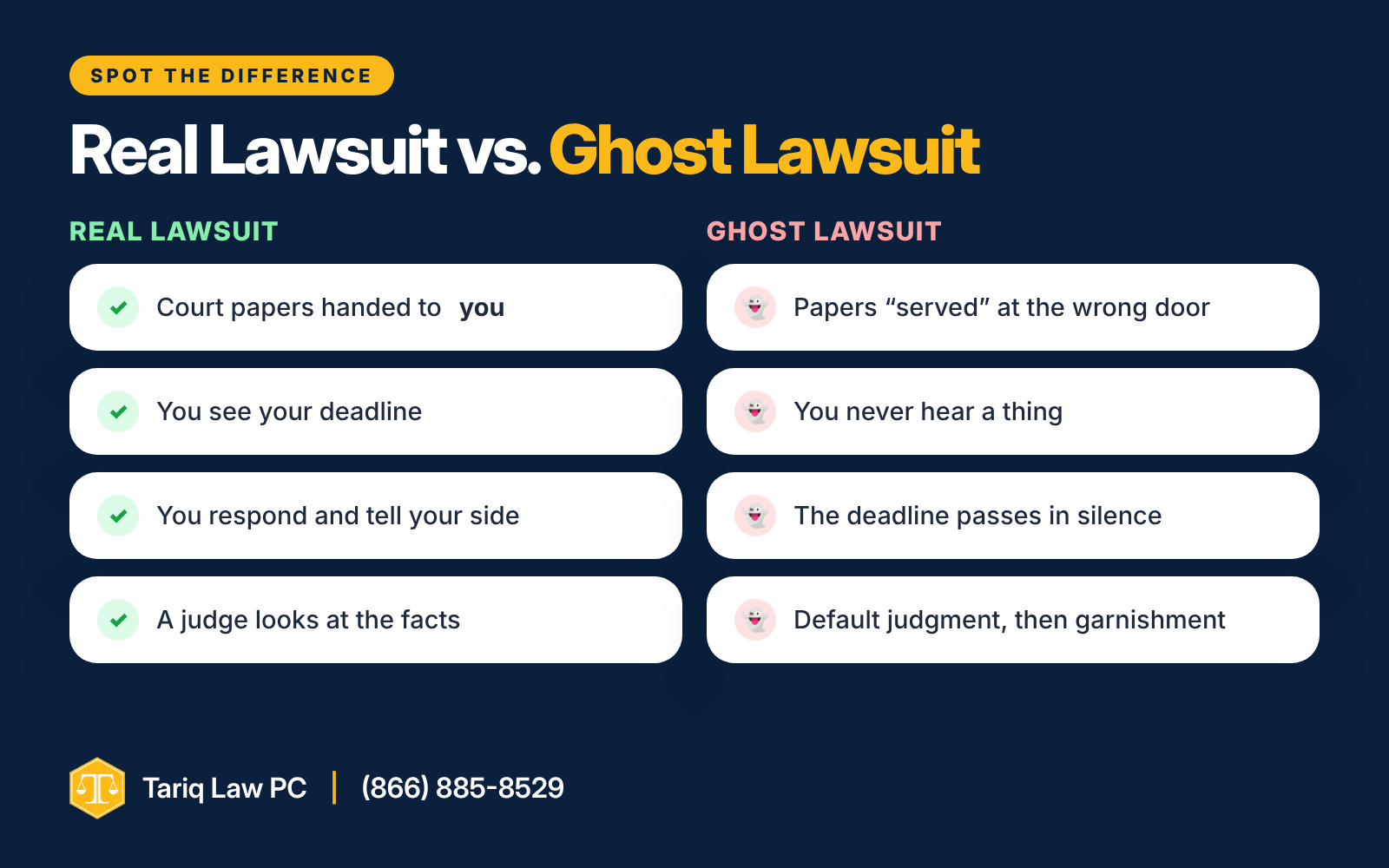
When someone sues you, the law says they must properly deliver the court papers to you. This is called service of process. If you don't respond in time, the court can enter a default judgment against you without ever hearing your side.
The trouble starts when the papers never actually reach you. Lawyers call this sewer service: a process server claims they delivered your papers, but they didn't. The name comes from the joke that the papers were tossed "down the sewer."
This isn't a holiday ghost story. In 2025, NYS Focus reported that fewer than one in five New Yorkers sued for debt in NYC from 2019 to 2023 even responded to the lawsuit. One investigation found a single server company recorded being in two places at once hundreds of times. Some people only learned about their case years later, when their wages were garnished.
Fun (and scary) fact: in New York, a money judgment can generally be enforced for up to 20 years. That's why advocates call these old cases "zombie debts": they come back long after you thought they were gone.
How a ghost lawsuit happens (in 5 quiet steps)
A debt gets sold. An old credit card or store card debt is sold to a debt buyer, often for pennies on the dollar.
The debt buyer files a lawsuit. Usually in NYC Civil Court or a local court, sometimes at an old address you moved out of years ago.
The papers "get served." A process server swears they delivered the summons. Maybe they left it at the wrong apartment. Maybe they never came at all.
The deadline passes. In New York, you generally have about 20 or 30 days to respond, depending on how you were served. You can't respond to papers you never got.
The court enters a default judgment. The collector wins by default. Then come the surprises: a frozen bank account, a garnished paycheck, or a hit on your credit report.
What did NOT change
A default judgment is still a real court judgment. Ignoring it won't make it go away.
Collectors can still use it to collect. That includes wage garnishment (an income execution) and bank restraints.
New York still gives you ways to challenge it. Especially if you were never properly served. More on that below.
New York did add protections in 2022. Under the Consumer Credit Fairness Act, the court clerk mails you an extra notice of the lawsuit, and debt buyers must file more proof before getting a default judgment. These rules help, but they don't stop every ghost lawsuit, and many older judgments were entered before they existed.
Real lawsuit vs. ghost lawsuit
Found a default judgment you didn't know about? Do this next
Don't panic, and don't pay yet. Paying first can make it harder to challenge the judgment later, and it doesn't tell you if the debt is even right.
Get the court file. Find the court, the index number, and the plaintiff's name. They're usually on the garnishment or bank notice. Look up the case on WebCivil Local or ask the court clerk.
Read the affidavit of service. This is the server's sworn statement of when, where, and how you were "served." Check the address, date, and the description of the person they say they handed it to. Wrong building? Wrong person? You were out of town? Write it down.
Gather proof of where you were. Leases, utility bills, work schedules, travel records, or anything showing you didn't live there or weren't there.
Act fast. Some deadlines to challenge a default judgment run from when you learn about it. Holiday season is not a reason to wait until January.
One big exception
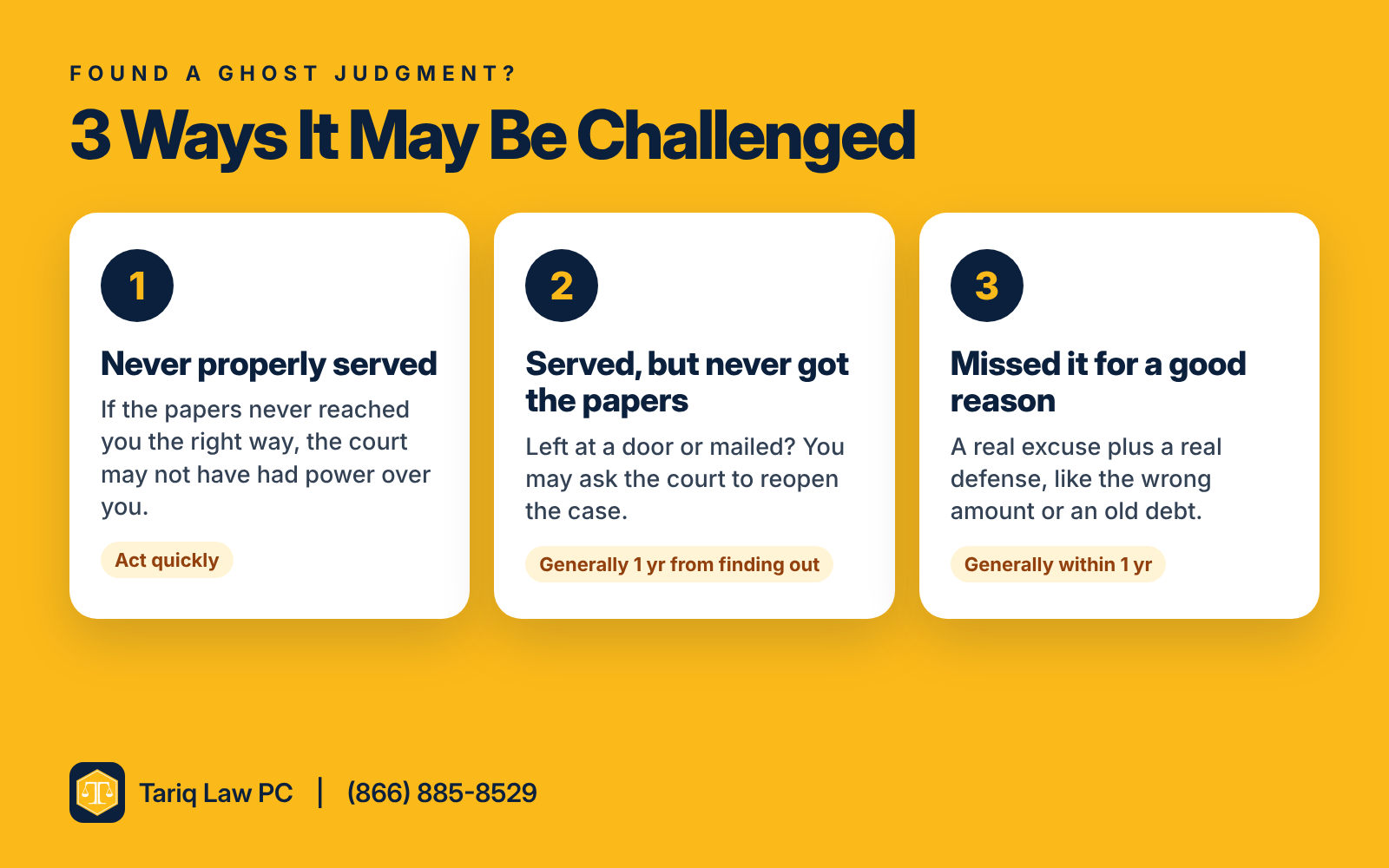
If you were properly served and just ignored the papers, a ghost-lawsuit argument won't help. But that doesn't always mean you're out of options. New York courts may still undo a default if you had a reasonable excuse for missing the deadline and a real defense to the debt, like the wrong amount, the wrong person, or a debt too old to sue on. These requests generally must be made within about a year, so timing matters.
When should you talk to a lawyer?
Talk to a consumer protection lawyer as soon as possible if:
Your paycheck is being garnished for a debt you didn't know was in court.
Your bank account was frozen and the notice mentions a judgment.
The address on the affidavit of service is one you didn't live at, or the person described isn't you.
The debt is old, not yours, or the wrong amount.
A collector is calling about a judgment you've never seen.
A lawyer can pull the court file, review how you were "served," and tell you whether a motion to vacate the default judgment makes sense. They can also look at whether the collector broke debt collection laws along the way. The sooner you act, the more options you may have.
FAQs
1. Can I be sued for debt in New York without knowing? Yes, it happens. If the court papers were never properly delivered, or were left at an old address, you may not find out until a default judgment is entered. Often the first sign is a garnished paycheck or a frozen bank account.
2. What is sewer service? Sewer service is when a process server claims they delivered court papers but didn't. It's a well-known problem in New York debt collection cases, and it's one reason people end up with default judgments they never knew about.
3. Can a default judgment be vacated in New York? Often, yes. If you were never properly served, a court may vacate the judgment because it never had jurisdiction over you. If you were served but had a good reason for missing the deadline and a real defense, a court may also undo it. Deadlines and rules apply, so act quickly.
4. How long does a default judgment last in New York? A New York money judgment can generally be enforced for up to 20 years. That's why an old judgment can suddenly show up as a garnishment years later.
5. Will my wages keep being garnished while I fight the judgment? Possibly. Asking to vacate a judgment doesn't automatically stop collection. A lawyer can ask the court to pause enforcement while your request is decided.
Attorney Advertising. This article is for general informational purposes only and is not legal advice. Reading it or contacting Tariq Law PC does not create an attorney-client relationship. Deadlines and options depend on your court, your case, and the facts. Prior results do not guarantee a similar outcome.


