Debt Collectors Can Now Only Call You 3 Times a Week in NYC.
You know the drill. Your phone buzzes at 8 a.m. Unknown number. Then again at lunch. Then a text. Then a voicemail asking you to "call back about an important matter." By Friday, you're scared to look at your own phone.
If you live in New York City, that just got a lot harder for debt collectors to do.
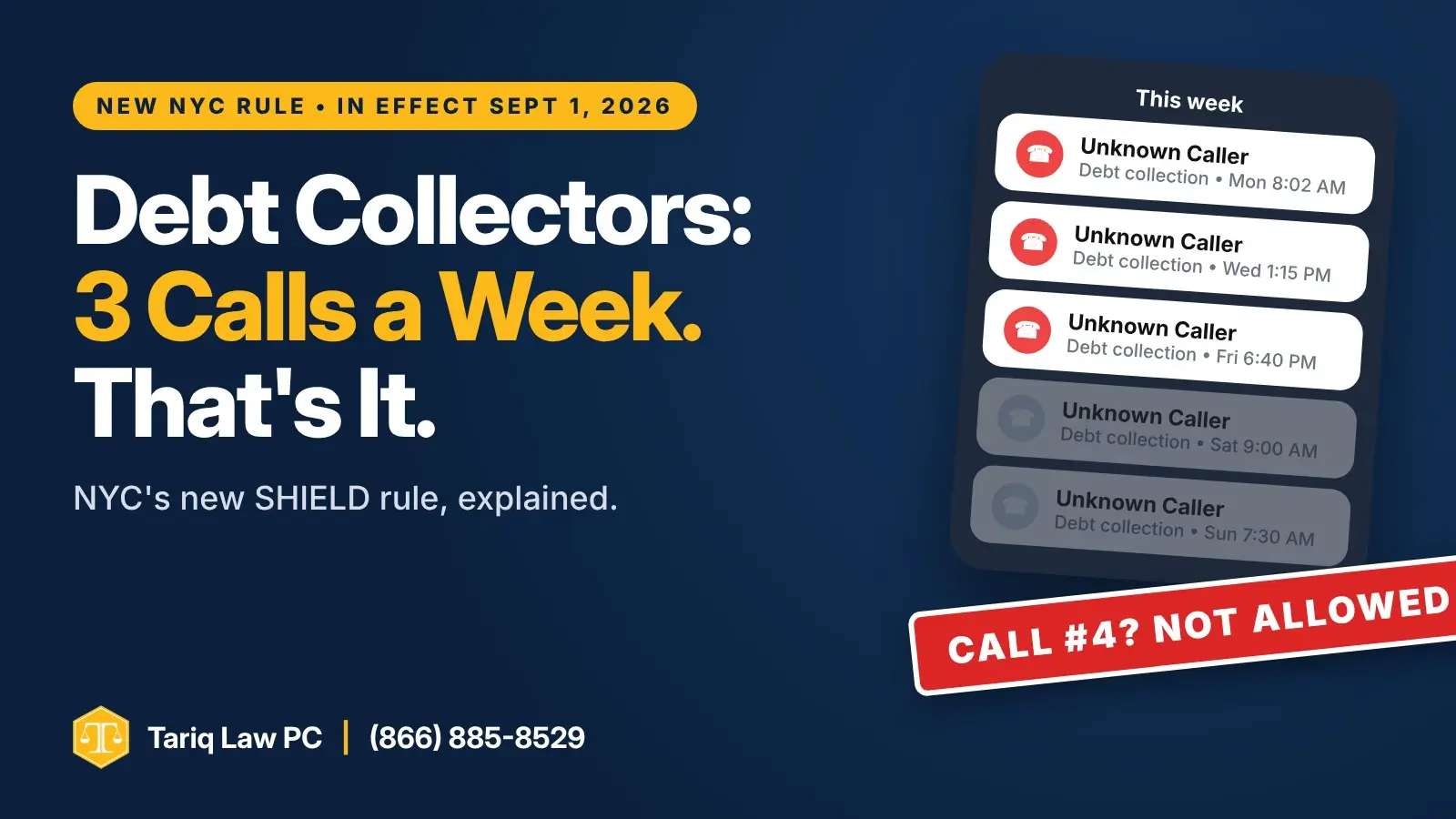
Since September 1, 2026, NYC's new SHIELD rule caps collectors at 3 contacts in 7 days. That's calls, texts and emails combined. City officials call it the strongest debt collection protection in the country. Here's what changed, and how to use it.
First, What Is the SHIELD Rule, and Why Should You Care?
SHIELD stands for Stopping Harassment and Intimidation and Ensuring Lawful Debt Collection. It's a set of rules from NYC's Department of Consumer and Worker Protection (DCWP), announced in February 2026 and in effect since September 1.
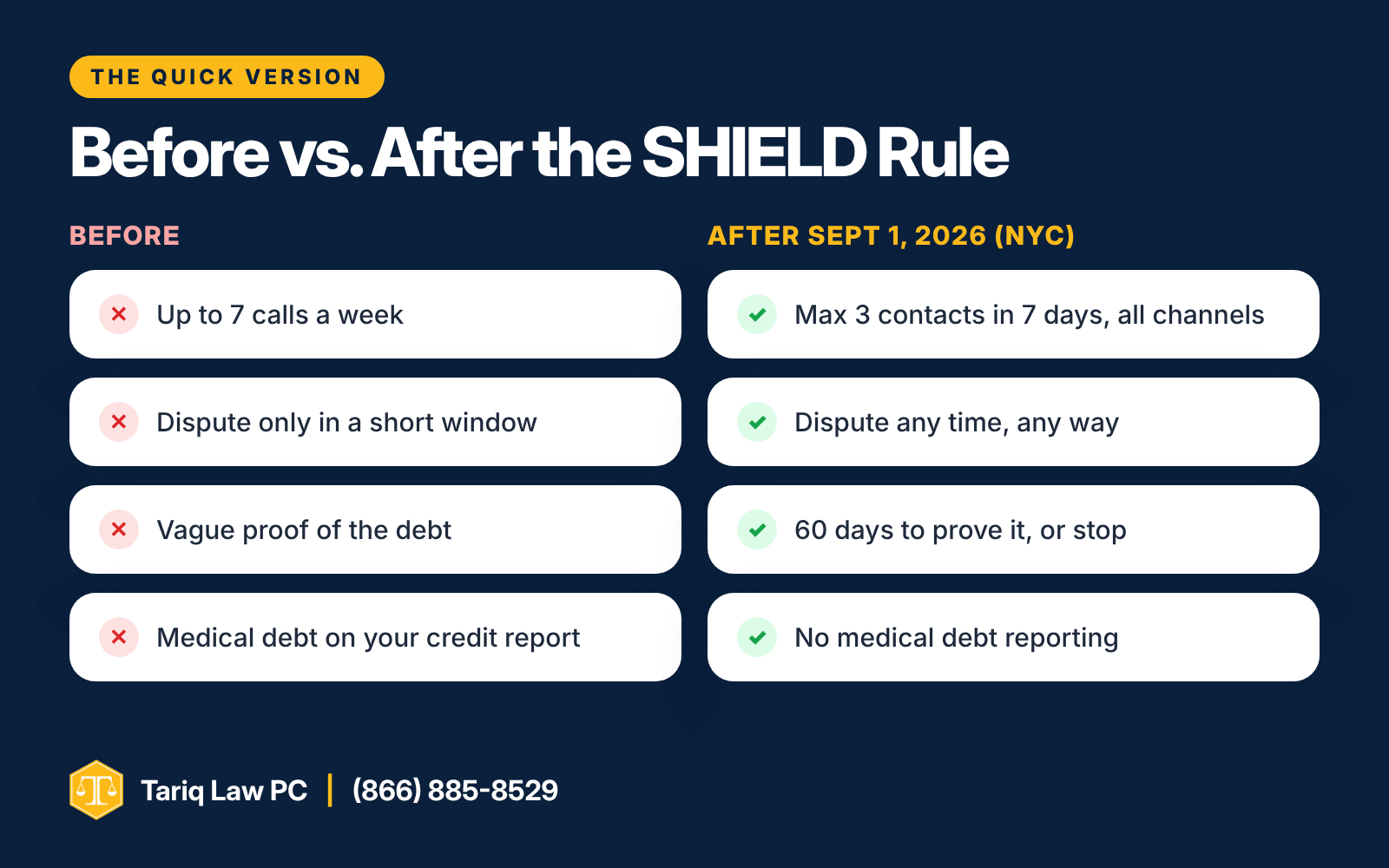
Until now, most people relied on the federal Fair Debt Collection Practices Act (FDCPA) and the CFPB's rule that presumes 7 calls in 7 days is too many. NYC just cut that number by more than half.
And it doesn't only cover collection agencies. Debt buyers are covered, and so are original creditors like banks and hospitals once they start collecting on a past-due account.
What Actually Changes Under NYC's SHIELD Rule
1. Three contacts a week. Total.
Collectors can reach out (or try to) no more than 3 times in 7 days per account. Calls, texts, emails and "limited content" voicemails all count together. Once you respond, they can't keep contacting you for the rest of that 7-day window. (Venable)
2. You can say "I dispute this" any time, any way
No more tight dispute windows. You can dispute the debt or ask for proof at any point, by phone, text, email or letter, using whatever channel the collector has been using with you.
3. Prove it in 60 days, or stop
After you dispute, the collector must send real documents backing up the debt within 60 days. If they can't, they must send you a Notice of Unverified Debt, and debt buyers and third-party collectors lose the right to collect it. And here's a big one: a default judgment alone doesn't count as proof.
4. No surprise fees
If the amount includes interest, fees or costs, you can ask for a full breakdown, and the collector has to show the legal or contract basis for each charge.
5. A warning before old debt and credit reporting
Before chasing a time-barred (expired) debt, collectors must send a written notice and wait 14 days. The notice must warn that paying could restart the clock on some debts. They also have to give you 14 days' written notice before reporting negative info to the credit bureaus.
What did NOT change
You still owe a debt that's valid. The rule limits how they collect, not whether you owe.
The rule covers NYC. Outside the five boroughs, the federal FDCPA and New York State rules still apply.
You can't sue under the SHIELD rule itself. NYC's DCWP enforces it. But the federal FDCPA still lets you sue a collector that breaks its rules.
Before vs. After: The Quick Version
How to Use Your New Rights (Without Losing Your Mind)
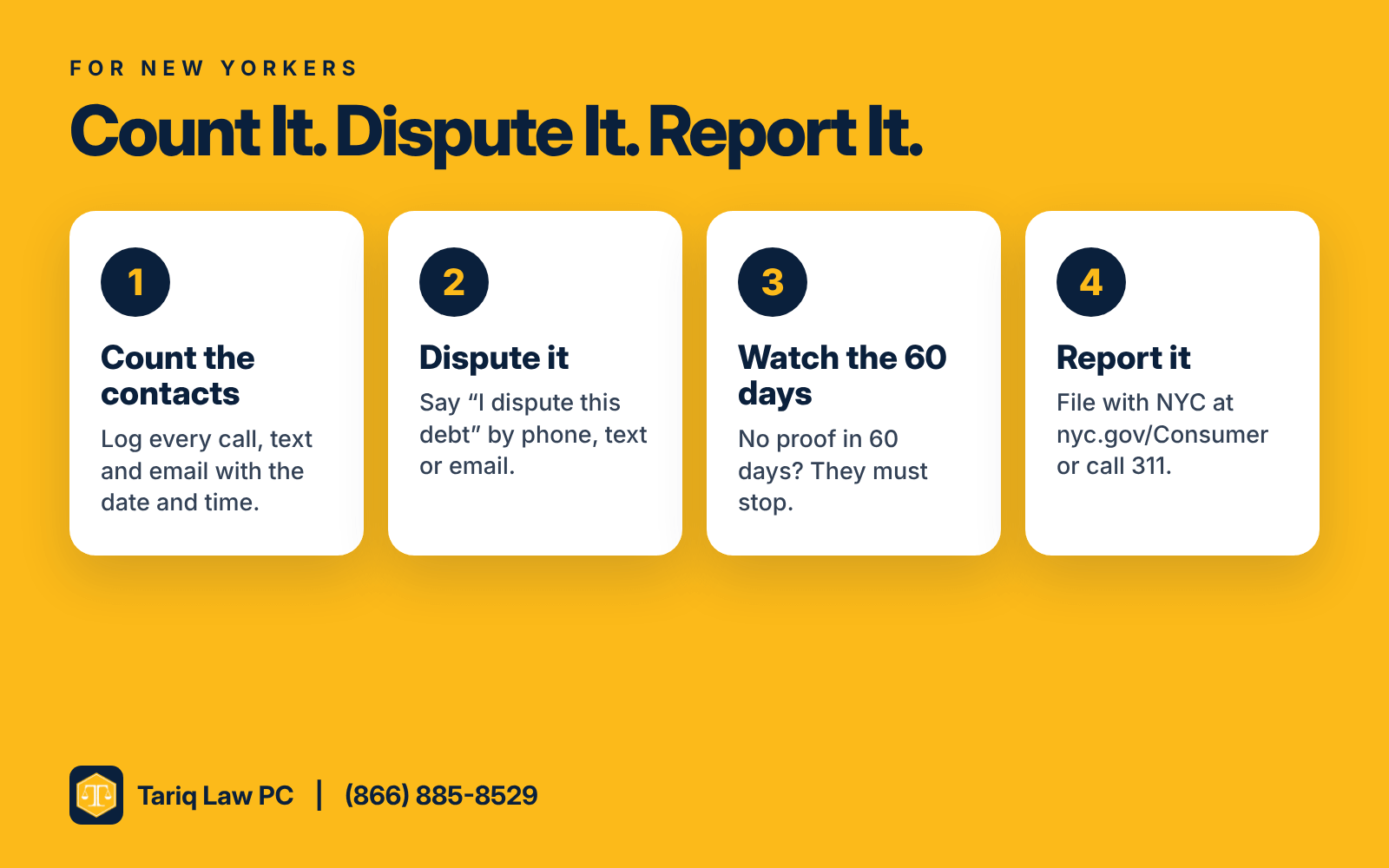
Keep a call log. Write down every call, text and email: date, time, number and what they said. Screenshots count.
Count to three. A fourth contact in the same 7 days may break the rule.
Say the magic words. "I dispute this debt. Please send me proof." Say it in whatever way they've been reaching you, and save a copy.
Mark day 60 on your calendar. No proof by then? Ask for your Notice of Unverified Debt.
Don't pay on an old debt without advice. On some debts, a small payment can restart the clock.
Report violations. File a complaint at nyc.gov/Consumer or call 311.
One big exception: being sued is a different game
The SHIELD rule controls how collectors contact you. It doesn't stop a lawsuit. If you get a summons and complaint, you have a short deadline to respond in court. Miss it, and the collector can win by default and go after your bank account or paycheck. Don't let calm phones lull you into ignoring court papers.
When Should You Talk to a Debt Defense Lawyer?
Consider reaching out if:
A collector contacts you more than 3 times in a week, or keeps going after you respond
They call your job, your family or your friends about the debt
They threaten arrest, jail or taking your home
They can't prove the debt but keep collecting anyway
They're adding fees you never agreed to
You've been served with a debt lawsuit, or your bank account was frozen
Tariq Law PC is a consumer protection law firm in New York City, not a debt settlement or credit repair company. We review debt collection lawsuits and collector harassment, and we offer free case evaluations for qualified matters.
Frequently Asked Questions
These are real questions people have asked online.
1. How many times can a debt collector call me in a week?
In NYC, no more than 3 contacts in 7 days per account, counting calls, texts and emails together. Outside NYC, the federal rule presumes more than 7 call attempts in 7 days is harassment.
2. "A debt collector calls me over 10 times a day. Can I sue?"
Possibly. Repeated calls meant to annoy or harass can break the federal FDCPA, which lets you sue for actual damages, up to $1,000 in extra damages, and attorney's fees. In NYC, 10 calls a day is far past the new 3-a-week limit. Keep a call log before you do anything else.
3. "Can they keep calling my cell and my work after I told them to stop?"
Generally, no. Collectors can't call you at work if they know your employer doesn't allow it. Under the SHIELD rule, you can now tell them to stop by phone, not just in writing. Put it in writing anyway, so you have proof.
4. "What can I do if debt collectors are harassing my family?"
Collectors can contact relatives only to find your address or phone number. They generally can't tell your family about the debt. If they do, write down who they called and what they said, and talk to a lawyer.
5. "Are there limits on what time they can call?"
Yes. Collectors generally can't contact you before 8 a.m. or after 9 p.m. your time, or at any time they know is inconvenient for you.
Attorney Advertising. This article is for general informational purposes only and is not legal advice. Reading it does not create an attorney-client relationship. Past results do not guarantee a similar outcome. Attorney review pending.


