Wrong Charge on Your Bank Account? Your EFTA Rights Explained | Tariq Law PC
Fraud Alert: Wrong Charge on Your Banking Account?
Know Your Rights Under the EFTA
Imagine this: you check your bank account one morning and notice a $500 charge you never made.
No alert. No email. Just gone.
If this has happened to you, take a breath—you are not powerless. When money is taken from your account without authorization, federal law may protect you.
The Electronic Fund Transfer Act (EFTA) gives consumers important rights when banks, debit cards, or electronic payments go wrong. Below, we explain what the EFTA is, what steps you should take immediately, and how Tariq Law PC can help you fight back and potentially recover your money.

What Is the Electronic Fund Transfer Act (EFTA)?
The Electronic Fund Transfer Act (EFTA) is a federal consumer protection law that applies when money is moved electronically, including:
●Debit card transactions
●ATM withdrawals
●Direct deposits
●Online and mobile banking transfers
If an unauthorized transaction, bank error, or fraudulent charge appears on your account, the EFTA gives you the right to dispute it and requires banks to follow strict investigation rules.

Common EFTA Fraud & Bank Error Scenarios
You may be protected under the EFTA if:
●Someone stole your debit card and made purchases
●A canceled subscription continued charging your account
●You were charged the wrong amount or charged twice
●A scammer accessed your account online or through phishing
●Money was withdrawn without your authorization
If any of these sound familiar, time matters.

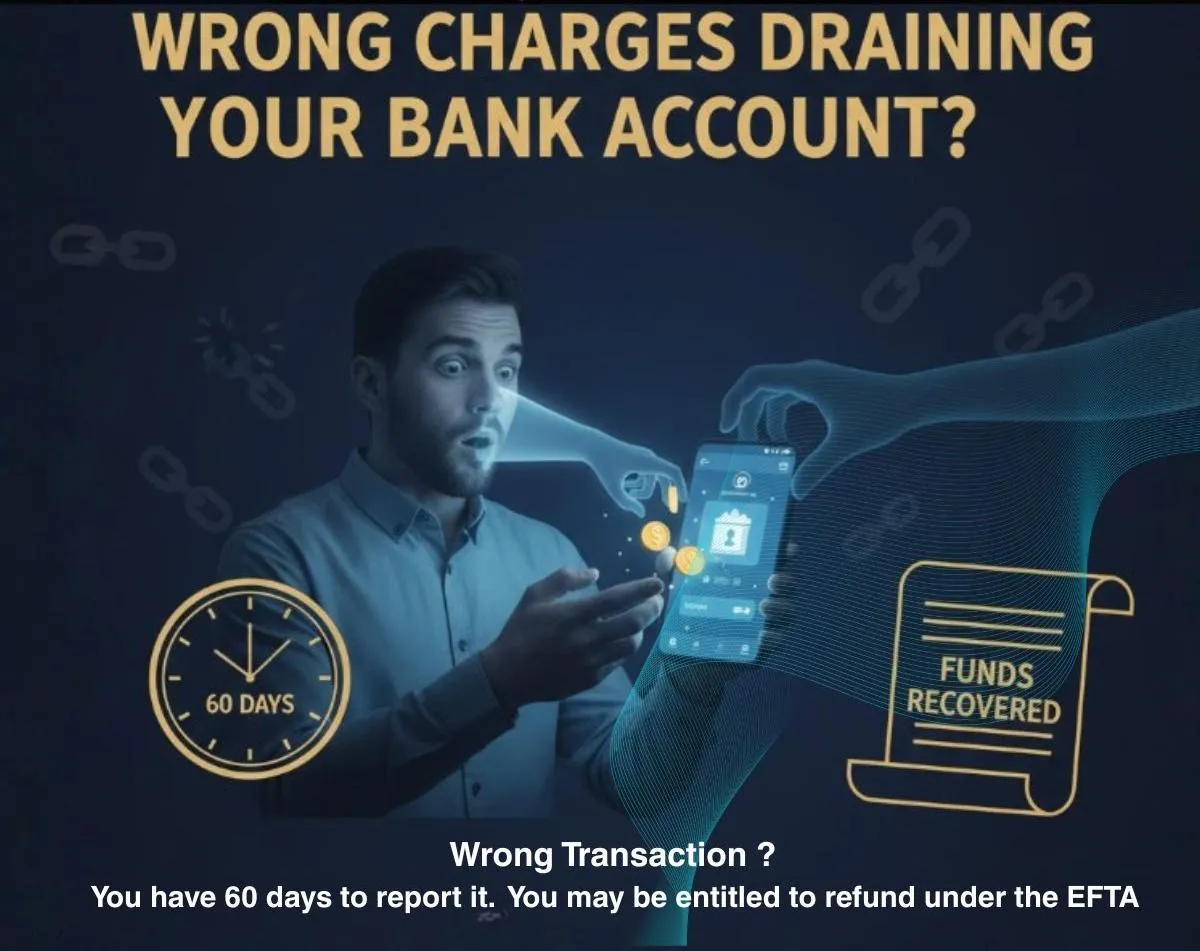
Act Fast: The 60-Day Rule Under the EFTA
Under the EFTA, you generally have 60 days from the date the error appears on your bank statement to notify your bank.
Waiting too long can limit—or even eliminate—your legal protections. The sooner you act, the stronger your claim may be.

What To Do If You Spot a Fraudulent Bank Charge
1. Freeze Your Card or Account Access
Lock your debit card through your banking app or call your bank immediately
Request a fraud alert to prevent further withdrawals
2. File a Dispute With Your Bank
●Report the unauthorized charge by phone or in person
●Submit a written dispute letter within 10 business days (this step is critical)
3. Request a Provisional Credit
● In many cases, the EFTA requires banks to temporarily credit your account while they investigate
4. Track the Bank’s Investigation
●Banks usually have 10 business days to investigate (up to 45 days in some cases)
●If your claim is denied without proper justification, your rights may have been violated
5. Monitor Your Account Closely
●Watch for additional suspicious activity
●Request written confirmation of the bank’s final decision
What If Your Bank Refuses to Help?
Unfortunately, some banks fail to follow the law. When that happens, legal action may be necessary.
Tariq Law PC helps consumers when banks:
●Ignore or dismiss valid fraud disputes
Deny refunds without conducting a proper investigation
Fail to respond to written EFTA disputes
●Violate consumer protection laws
If a bank breaks the rules, you may be entitled to damages, and in some cases, the bank must pay your attorney’s fees.
How Tariq Law PC Can Help With EFTA Claims
At Tariq Law PC, we stand up for everyday consumers—not big banks. Our firm has experience enforcing federal consumer protection laws, including the EFTA, FCRA, and related statutes.
We can help by:
●Drafting strong, legally compliant dispute letters
●Communicating directly with banks on your behalf
●Investigating fraud and account access issues
●Filing lawsuits when banks violate your rights
●Pursuing refunds, damages, and legal costs
Many EFTA cases are handled on a contingency basis, meaning you may not pay unless we recover compensation for you.
Signs You Should Contact an EFTA Attorney
Reach out to us if:
●Your bank denied your fraud claim unfairly
●You never received a proper investigation
Your written dispute was ignored
You feel overwhelmed and unsure what to do next
You do not have to handle this alone.
Think Your Rights Were Violated?
Banks are required to follow the law. When they don’t, we hold them accountable.
If money was wrongfully taken from your account and your bank refuses to fix it, Tariq Law PC is ready to help.
👉 Call Tariq Law PC today or fill out our secure online form to schedule a free consultation.
You have rights. We’re here to enforce them.


