The Paycheck They Couldn't Take
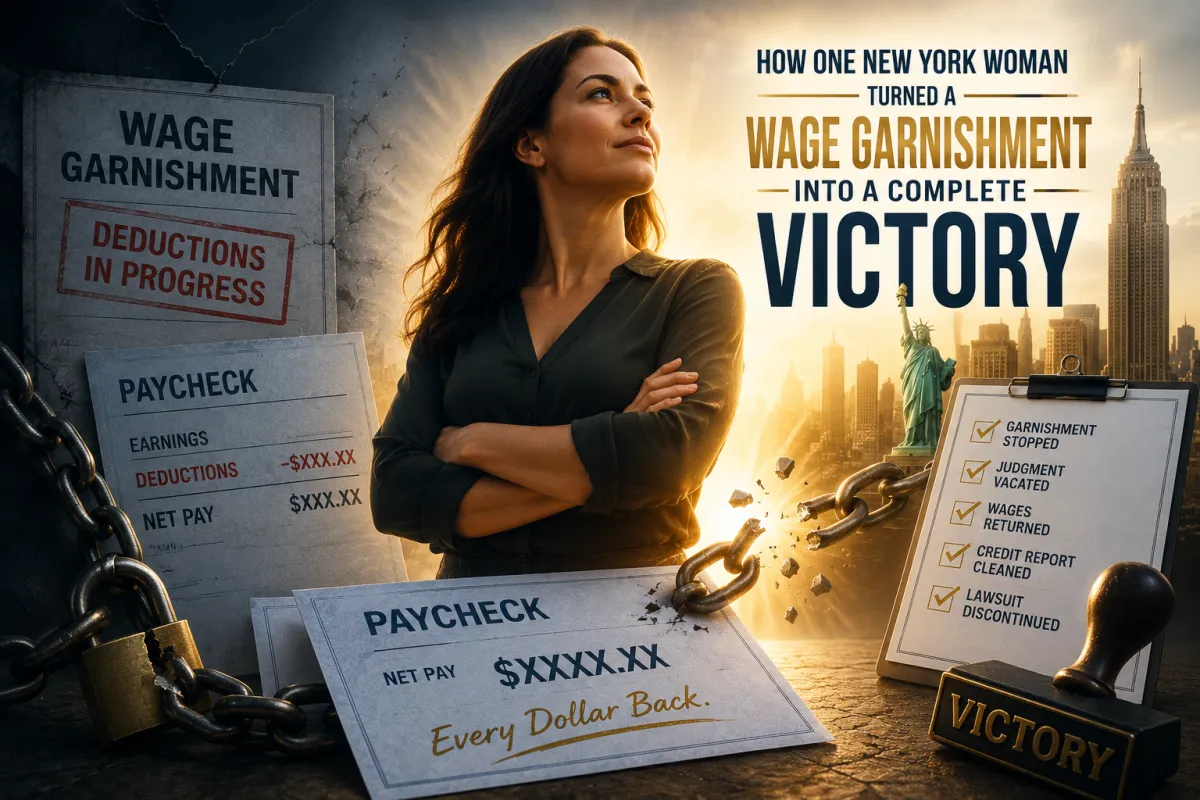
How One New York Woman Turned a Wage Garnishment Into a Complete Victory
The first sign that something was wrong wasn't a phone call or a letter.
It was her paycheck.
For more than a decade, she had worked the same job. Every two weeks, her direct deposit arrived exactly as expected. It was predictable, dependable, and carefully budgeted around rent, groceries, utilities, and the countless expenses that come with raising a family.
Then one Tuesday morning, the numbers didn't add up.
Her paycheck was significantly smaller than usual.
At first, she thought it was a mistake. Perhaps payroll had made an error. Maybe there had been a tax adjustment she wasn't aware of. But after a few phone calls, she learned the truth.
A debt collector had obtained a wage garnishment order and was taking money directly from her earnings before the funds ever reached her bank account.
No warning. No conversation. No opportunity to explain.
The money she worked for was simply gone.
An Old Debt Comes Back to Life
The garnishment stemmed from a credit card debt that dated back nearly a decade.
Over the years, the account had been bought, sold, and transferred between multiple companies. By the time the garnishment began, the debt had passed through so many hands that even identifying who owned it had become complicated.
Yet someone was collecting.
Every payday, a portion of her wages was diverted away from her family and into the hands of a company she had never dealt with directly.
For many people, that would have been the end of the story.
They would assume the judgment was valid.
They would assume nothing could be done.
They would simply watch the deductions continue.
She chose a different path.
Fighting Back
When she contacted Tariq Law PC, the firm's legal team immediately began investigating the case.
Old debts often come with old problems.
Records disappear. Documents become incomplete. Interest calculations become questionable. Ownership transfers create gaps in the paper trail. What appears straightforward on the surface can quickly unravel when examined closely.
The team reviewed the judgment, traced the history of the account, scrutinized the chain of assignments, and challenged the basis for the collection efforts.
The deeper they looked, the more questions emerged.
And those questions created leverage.
What began as a wage garnishment matter soon became something much larger: a demand for accountability.
The Collector Became the One Writing the Check
As pressure mounted, the outcome shifted dramatically.
Instead of continuing to take money from her paycheck, the collector was forced to return it.
Every dollar that had been garnished was paid back.
The judgment that allowed the garnishment was vacated.
The collection lawsuit was discontinued.
The negative tradeline associated with the account was removed from her credit report.
The debt wasn't reduced.
It wasn't placed on a payment plan.
It wasn't settled for pennies on the dollar.
It was eliminated.
The legal burden that had followed her for years was erased.
A Different Kind of Payday
The next paycheck arrived exactly as it should have.
No deductions.
No garnishment.
No surprise withdrawals
For the first time in months, she knew every dollar she earned would stay where it belonged.
With her.
And with her family.
For many consumers, wage garnishment feels final. Once money starts leaving a paycheck, it can seem impossible to stop. But the reality is that debt collectors, debt buyers, and collection law firms are not immune from mistakes.
Judgments can be challenged.
Collection efforts can be scrutinized.
And consumers have rights that deserve to be protected.
The Lesson
Debt collectors count on people feeling powerless.
They count on consumers assuming that because a court order exists, the fight is over.
Often, it isn't.
The difference between losing your paycheck and reclaiming it can be knowing your rights and having someone willing to enforce them.
For this client, that made all the difference.
The collector thought they had secured a stream of income.
Instead, they ended up writing the refund check.
Are Your Wages Being Garnished?
If money is being taken from your paycheck, you may have more options than you realize.
Wage garnishments are frequently based on old judgments, debt buyer lawsuits, or accounts that have changed hands multiple times. In some cases, collectors may lack critical documentation, rely on inaccurate records, or pursue debts that deserve closer scrutiny.
Tariq Law PC helps consumers fight back against wage garnishment, debt collection lawsuits, and unlawful collection practices throughout New York.
Your Wages. Your Rights. Your Fight.
If a debt collector is taking money from your paycheck, don't assume there's nothing you can do.
Contact Tariq Law PC to learn about your rights and explore your legal options.
Call: (866) 885-8529
Email: [email protected]
Website: www.tariqlaw.com
Thank you for trusting Tariq Law PC. Names, identifying details, and certain facts have been modified to protect client privacy.
Disclaimer: This article is provided for informational purposes only and does not constitute legal advice. Every case is unique. Consult a qualified attorney regarding your specific circumstances.


